How to Make a Small Room Feel Bigger

A room’s sense of openness has far more to do with scale, flow, and visual decisions than actual square footage. Two rooms with identical dimensions can feel completely different depending on furniture size, color placement, and where the eye gets pulled first. These strategies change how a small room feels without knocking down a single wall.
Declutter Before Changing Anything Else
Removing excess belongings is the single fastest, cheapest way to make a small room feel larger, since visual clutter registers as reduced space even when the actual square footage stays the same. This step comes before paint, furniture, or any other strategy on this list.
A small space packed with belongings reads as cramped regardless of how the walls are painted or how furniture gets arranged. Clearing out items that aren’t actively used, especially anything stored purely out of habit, creates the breathing room every other technique depends on.
This isn’t a one-time task either. Small rooms accumulate clutter faster than large ones simply because there’s less room to absorb extra items before the space starts to feel tight again.
Choose Bigger Furniture, Not Smaller
Undersized furniture actually makes a small room feel smaller by emphasizing its limited proportions, while normally scaled furniture creates a calmer, more cohesive feel. This runs directly against the common instinct to buy miniature pieces for a tight space.
Tiny sofas, narrow coffee tables, and undersized rugs fragment a room visually instead of unifying it. A rug sized appropriately for the room, ideally leaving only a couple of feet between the rug’s edge and the walls, anchors the furniture arrangement instead of making it look scattered.
Between big furniture in a small room and small furniture in a large room, designers consistently favor the former. Proportionate furniture reads as intentional, while undersized furniture reads as an apology for the room’s size.
Float Furniture Instead of Pushing It to the Walls
Pulling key furniture pieces a few inches away from the walls, rather than shoving everything against the perimeter, creates better balance and makes a narrow room feel less constrained. This is one of the most counterintuitive tricks on this list.
A sofa floated slightly forward with a slim console table behind it creates intentional structure instead of a room that looks like storage against every wall. The goal isn’t filling every available inch, it’s creating flow that lets the eye move smoothly through the space.
Clear pathways matter just as much as furniture placement. A room with an obvious, unobstructed route from the entrance through the space feels significantly larger than one where visitors have to navigate around obstacles to move through it.
Use Vertical Lines to Draw the Eye Upward
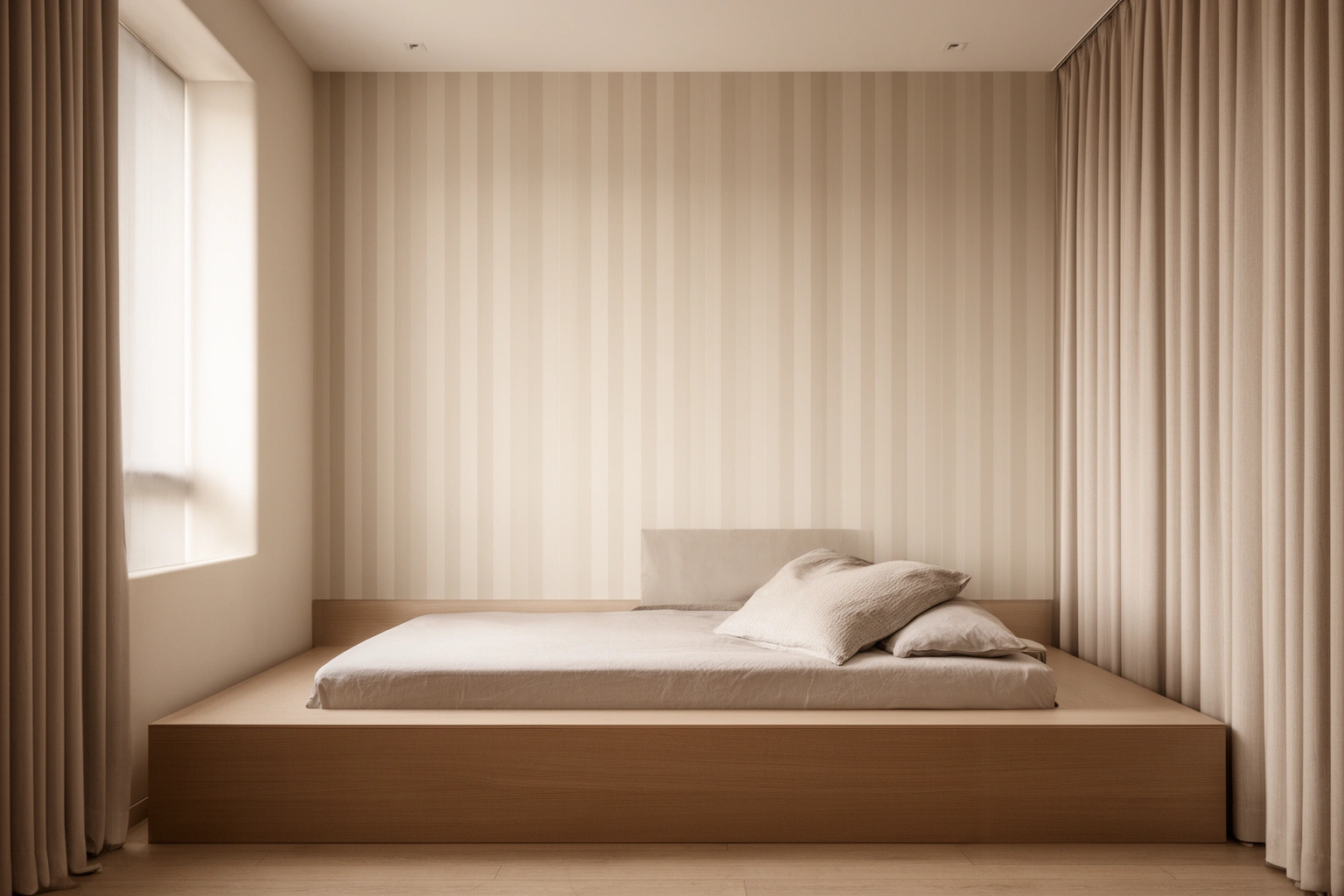
Introducing height through tall curtains, vertical shiplap, floor-to-ceiling bookcases, or striped wallpaper shifts a small room’s proportions in your favor by pulling attention upward instead of across a cramped floor. Small rooms often feel small because everything in them sits low.
Hanging curtains as close to the ceiling as possible, rather than just above the window frame, is one of the simplest versions of this trick. If a ceiling is 8 feet high, curtain panels around 96 inches create the visual stretch that makes the whole wall feel taller.
Tall bookcases naturally pull the eye upward the same way, while a low, wide storage unit does the opposite, making the ceiling feel closer than it actually is. The same principle applies to artwork: one large piece or a gallery arrangement that nearly reaches the ceiling reads as more expansive than several small frames scattered at eye level.
Rethink the “Just Paint It White” Advice
Light colors don’t automatically make every small room feel bigger, and in rooms with little natural light, an all-white scheme can actually feel flatter and more confined than a well-chosen mid-tone. Color strategy matters more than simply picking the lightest shade available.
The general rule of thumb holds up reasonably well: less natural light calls for a slightly darker palette, while rooms flooded with daylight tend to handle lighter colors better. A rich, dim room painted stark white with too much competing light from other areas of the home can feel disconnected rather than expanded.
Painting trim, moulding, and ceiling the same color as the walls erases the visual breaks that otherwise chop a small room into segments. High contrast between wall color and trim tends to visually shrink a room by creating too many stopping points for the eye.
Anyone comfortable tackling a bit of this hands-on will find plenty of overlap with easy weekend DIY projects for beginners, since a single accent wall or trim repaint is exactly the kind of low-risk, high-impact project that fits neatly into a weekend.
Add Large Mirrors With Intentional Placement
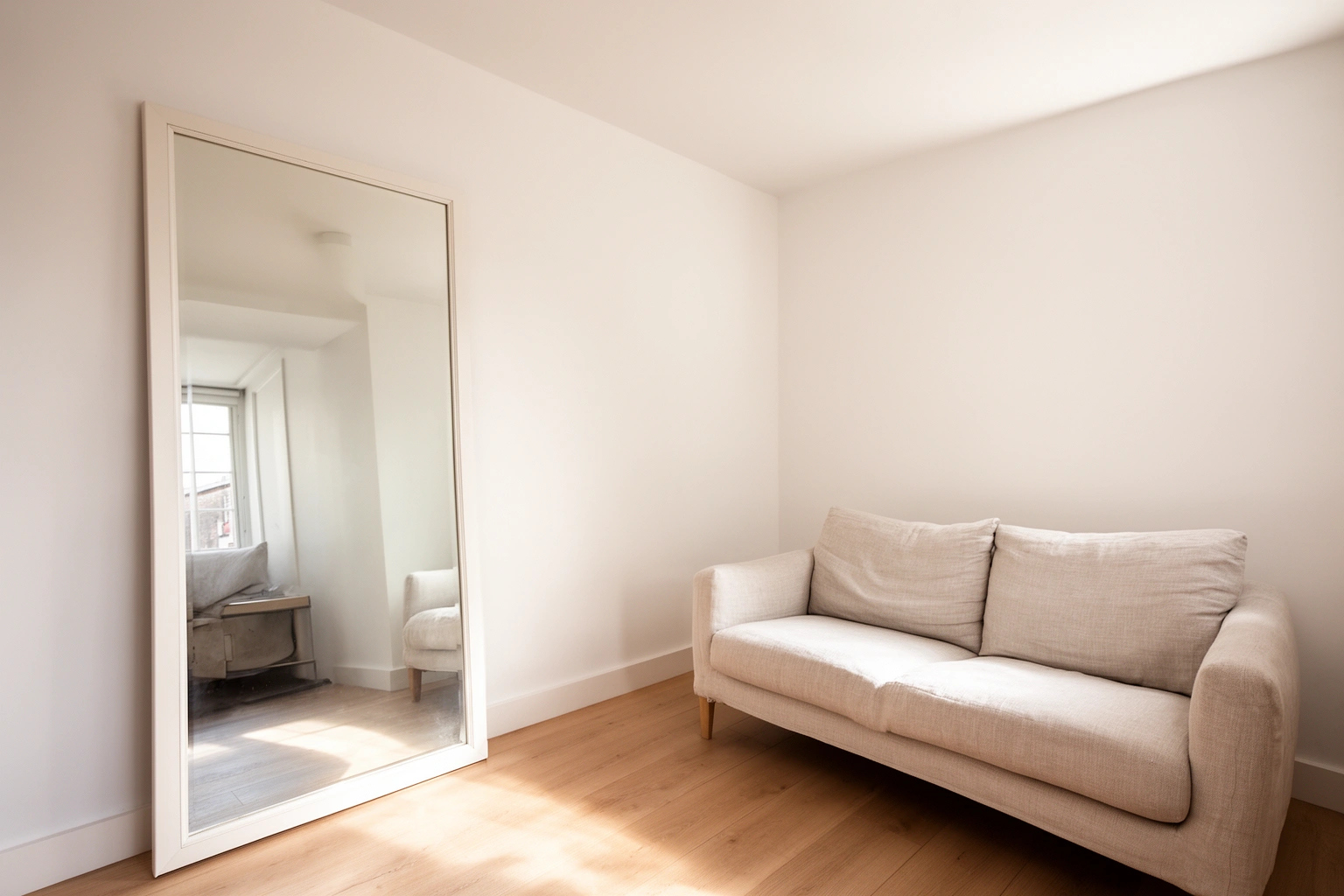
A large mirror positioned across from a window amplifies natural light and extends sightlines, creating a genuine sense of added depth rather than a decorative gimmick. Placement determines whether a mirror actually works or just hangs there.
A tall mirror leaned against a wall reinforces the same vertical lines discussed earlier, doing double duty for height and light reflection at once. Scattering several small mirrors around a room tends to underperform compared to one well-placed large piece, which can visually read almost like a window into another space.
Quick Comparison: What Actually Works
Some small-room tricks consistently outperform others, and knowing which ones to prioritize saves time and budget compared to attempting every strategy at once. Not every tip carries equal weight.
| Strategy | Cost | Impact |
|---|---|---|
| Decluttering | Free | Very High |
| Floating furniture off walls | Free | High |
| High curtain hanging | Low | High |
| Large mirror placement | Medium | High |
| Trim-matched wall paint | Medium | Medium |
| Buying larger, proportionate furniture | High | Medium |
Decluttering and floating furniture off the walls cost nothing and consistently rank as the two most effective ways to make a small room feel bigger.
Layering Light for a Softer, Bigger Feel
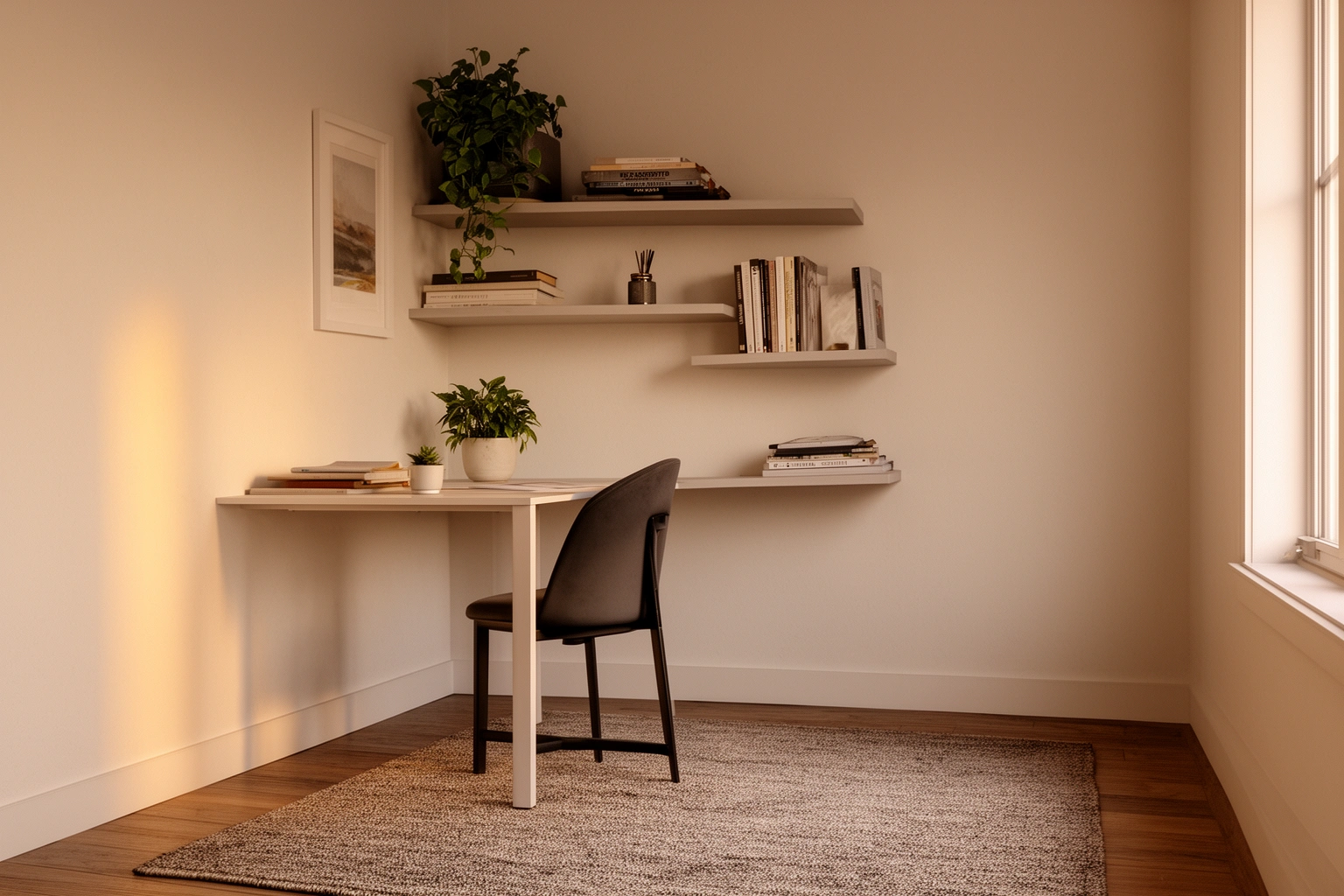
Multiple light sources at different heights, floor lamps, table lamps, and overhead fixtures, illuminate a small room more evenly than a single overhead light, softening shadows that otherwise emphasize the room’s boundaries. Even, layered light reduces the harsh contrast that makes corners feel closed in.
Dimmable fixtures add flexibility, letting a room shift between bright and functional during the day and softer, more relaxed in the evening without needing separate lighting setups for each mood.
Readers who enjoy this kind of practical, budget-conscious approach to home design can find more everyday inspiration on AestheticPFPs, where small, intentional changes get the same thoughtful treatment as bigger renovations.
Frequently Asked Questions
What is the single most effective way to make a small room feel bigger?
Decluttering is consistently the fastest, cheapest, and highest-impact way to make a small room feel bigger, since visual clutter registers as reduced space regardless of actual square footage.
Does painting a small room white always make it look bigger?
Not always. In rooms with little natural light, all-white schemes can feel flat and confined, while a well-chosen mid-tone can work better depending on how much daylight the room receives.
Should small rooms have small furniture?
Undersized furniture emphasizes a room’s limited proportions and fragments the space visually, while normally scaled, proportionate furniture reads as calmer and more intentional.
Where should a mirror go to make a room feel bigger?
A large mirror placed across from a window amplifies natural light and extends sightlines, and works better than several small mirrors scattered around the room.
How does vertical design make a room feel bigger?
Hanging curtains close to the ceiling, using tall bookcases, and choosing large vertical artwork all pull the eye upward, making proportions feel taller and more expansive.
Is it better to push furniture against the walls in a small room?
Pulling furniture a few inches away from the walls, rather than pushing everything to the perimeter, creates better balance and flow, especially in narrow rooms.