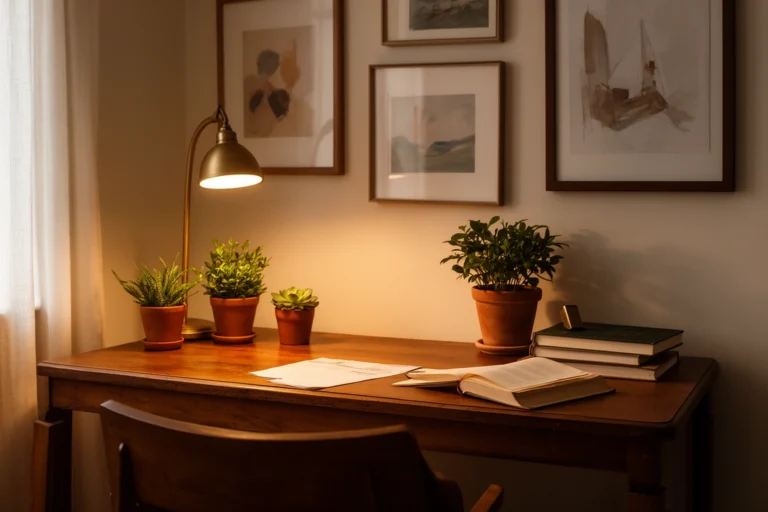
How Office Layouts Affect Employee Mood and Productivity

Office layout affects employee mood and productivity through measurable factors like natural light exposure, noise levels, and the balance between open collaborative space and private focus areas. Research from the World Green Building Council found an 11% productivity increase tied to improved air quality alone, while employees seated near windows reported an 84% drop in eyestrain, headaches, and blurred vision. These aren’t soft, subjective effects. They show up in health outcomes and measurable output.
The layout itself is rarely one-size-fits-all. What works for a creative agency built around spontaneous collaboration often backfires for a team that needs long, uninterrupted focus time.
Open-Plan vs. Cellular Offices
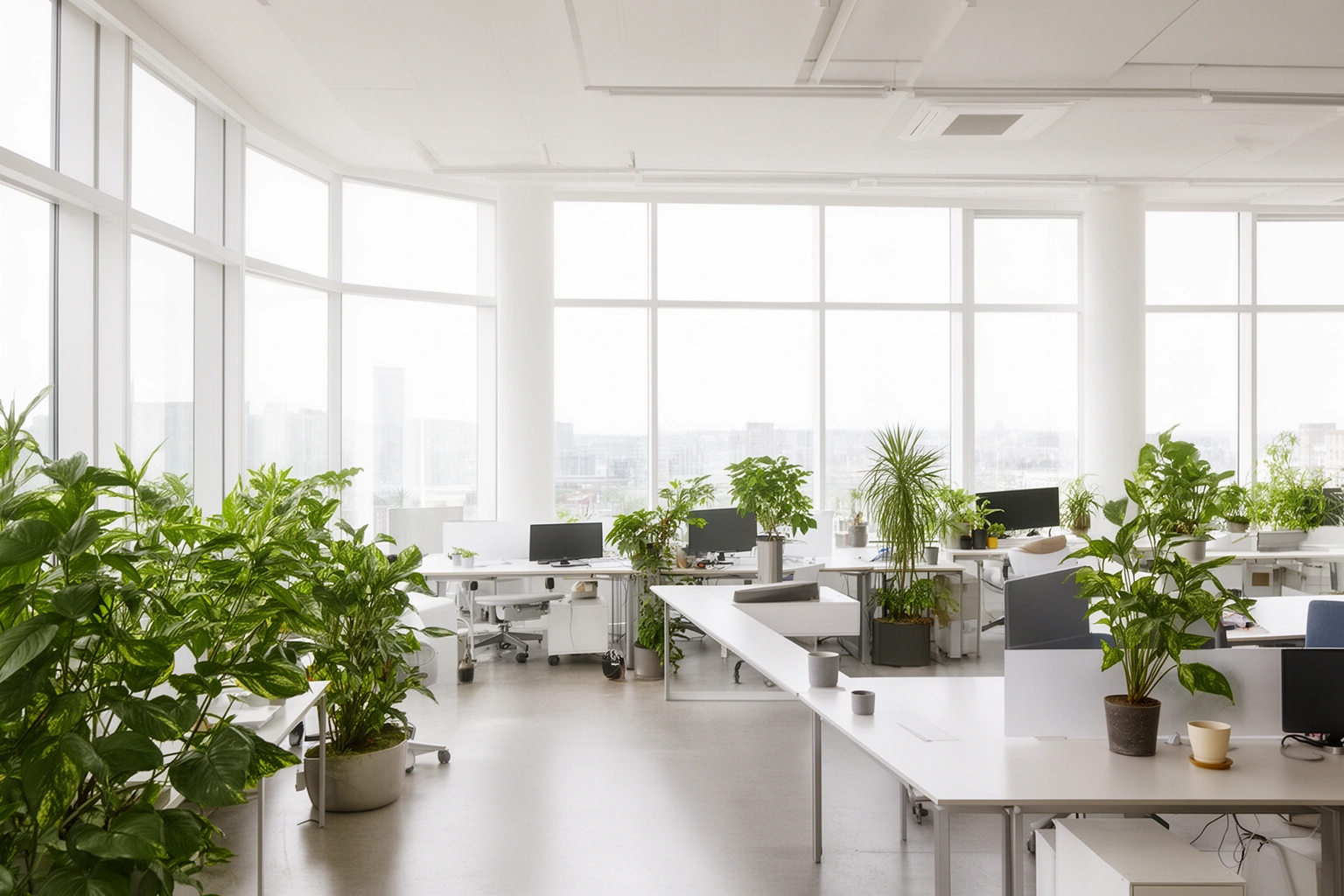
Open-plan layouts improve communication and idea-sharing but consistently increase distractions, while traditional closed-off cubicle layouts protect focus at the cost of isolation and lower job satisfaction.
Open floor plans remove physical barriers between employees, which speeds up casual conversation and spontaneous collaboration. Creative agencies and teams built around fast-moving brainstorming tend to benefit the most from this arrangement. The tradeoff is real, though: research shows open-plan environments increase distractions and reduce privacy, which specifically hurts tasks that require deep, sustained concentration.
Traditional cubicle-based layouts solve the focus problem but introduce a different one. Closed-off arrangements tend to reduce interaction between employees, and that reduced interaction has been linked to lower overall job satisfaction over time.
Why Neither Extreme Works Well Alone
The most effective office layouts combine both approaches, dedicating specific zones to focused solo work and separate zones to collaboration, rather than forcing every task into a single uniform space.
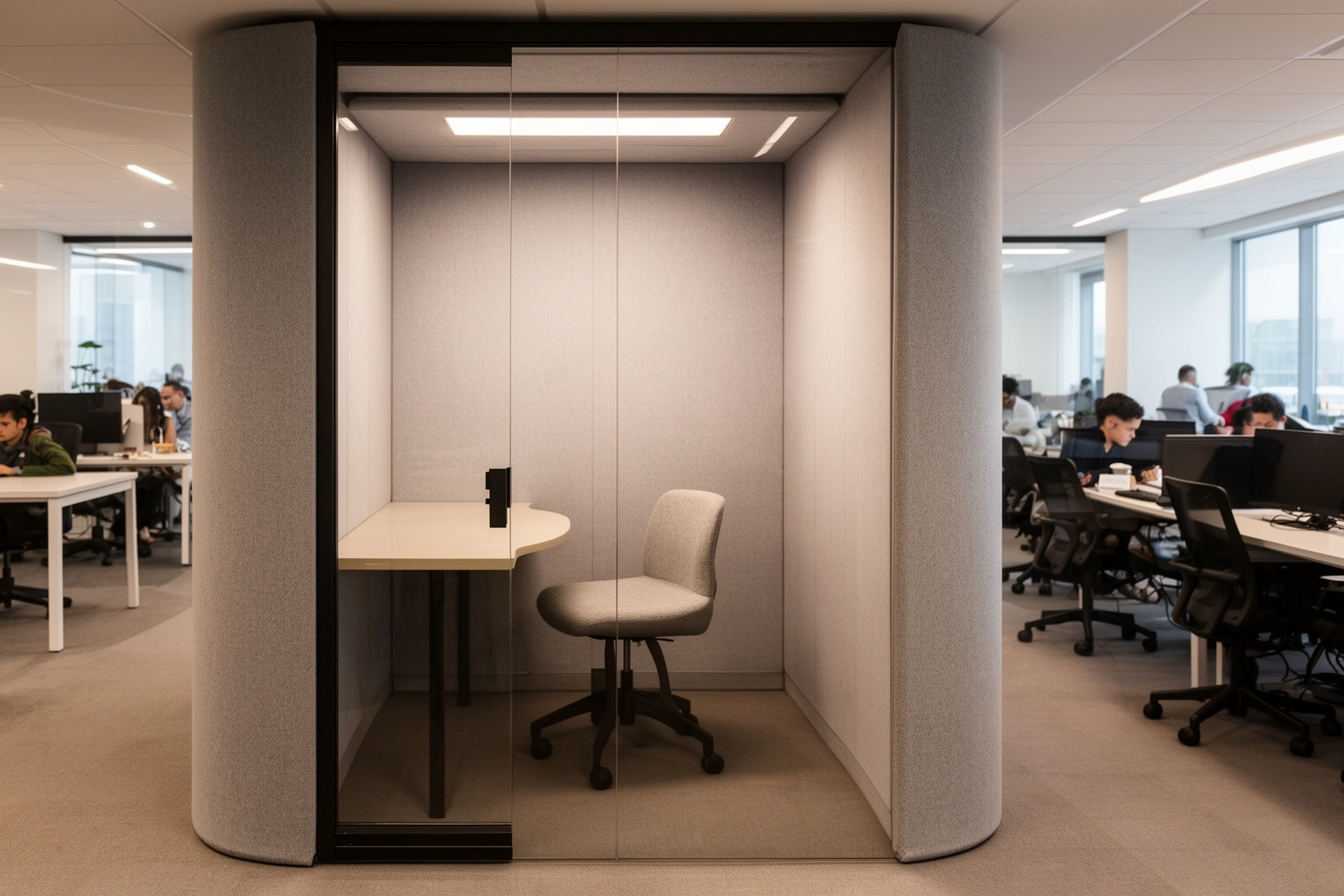
Over two-thirds of employees report being interrupted at least five times a day by loud disruptions, and background noise is one of the most commonly cited reasons for reduced creative and problem-solving capacity. A layout that offers quiet zones or small enclosed pods for deep work, alongside open lounge-style areas for team discussion, lets employees match the space to the task instead of fighting the environment regardless of what they’re working on.
Natural Light and Its Effect on Mood
Exposure to natural light measurably decreases symptoms of depression and improves mood, energy, and alertness, making window placement one of the highest-impact design decisions in any office layout.
A Cornell University study found that access to natural light in an office significantly improves health and wellness among workers, beyond simply making a space look nicer. Employees seated further from windows or reliant primarily on fluorescent lighting report more fatigue and lower energy over the course of a workday. Because window space is inherently limited, prioritizing natural light access for shared or rotating workstations, rather than reserving it exclusively for private offices, tends to spread the benefit across more of the team.
Acoustics and Noise Management
Poor acoustic design is one of the most commonly cited productivity killers in open offices, and addressing it usually requires a mix of physical materials and dedicated quiet spaces rather than a single fix.
Sound-absorbing panels, soft furnishings, and strategically placed plants all reduce ambient noise levels without requiring a full layout overhaul. Dedicated quiet zones, whether a small enclosed room or a designated no-talking area, give employees somewhere to retreat for tasks that genuinely require silence. White noise systems have also become a common workaround in fully open layouts, masking specific conversations without eliminating the collaborative benefits of the open space.
Biophilic Design: Bringing Nature Indoors
Incorporating plants, natural materials, and views of greenery into an office measurably reduces stress and improves both mood and cognitive function, a design approach known as biophilic design.
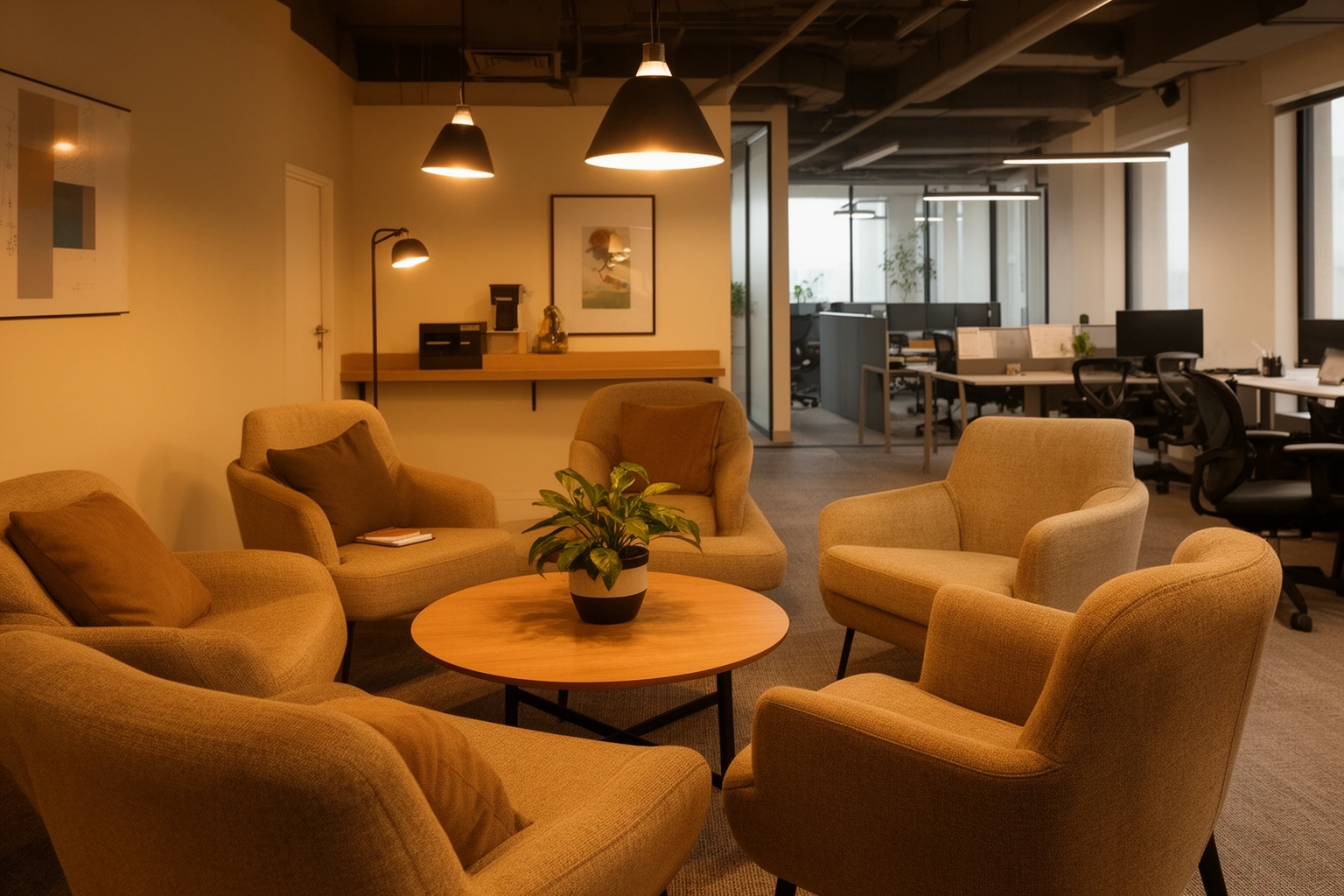
Organizations that prioritize biophilic design report higher job satisfaction and lower employee turnover, which suggests the effect goes beyond a simple aesthetic preference. Even modest additions, potted plants near workstations, wood-toned furniture instead of all-metal or all-plastic finishes, or a view of a courtyard, contribute measurably to a calmer overall atmosphere, even in offices without direct access to outdoor space.
Ergonomics and Physical Comfort
Comfortable, properly adjusted furniture reduces muscle fatigue and musculoskeletal strain, which directly supports sustained productivity over the course of a full workday.
Adjustable chairs, correctly positioned monitors, and desks suited to an individual’s height all reduce the physical discomfort that quietly erodes focus over several hours. Ergonomic issues tend to compound: minor discomfort early in the day often escalates into genuine pain and distraction by the afternoon, which has a direct, measurable effect on output quality regardless of how well-designed the rest of the layout is.
Comparing Common Office Layout Approaches
| Layout Type | Strength | Weakness |
|---|---|---|
| Open-plan | Strong collaboration and idea-sharing | High distraction, reduced privacy |
| Cellular/cubicle | Better individual focus | Isolation, lower job satisfaction |
| Hybrid (zoned) | Balances collaboration and focus | Requires more space and planning |
| Biophilic-enhanced | Lower stress, higher satisfaction | Ongoing maintenance of plants/materials |
Research from the World Green Building Council found this jump specifically tied to reduced pollutants and better ventilation, separate from any changes to layout or lighting.
Practical Steps for Improving an Existing Office Layout
Meaningful layout improvements don’t always require a full renovation; several high-impact changes can be made incrementally within an existing floor plan.
- Reassign desks near windows on a rotating basis: spreads the mood and health benefits of natural light more evenly across the team.
- Add sound-absorbing materials: panels, rugs, and soft furnishings reduce noise without requiring structural changes.
- Create at least one dedicated quiet zone: even a small enclosed room gives employees an option for deep-focus work.
- Introduce plants and natural materials: a low-cost way to bring measurable biophilic benefits into an existing space.
- Audit furniture ergonomics: adjustable chairs and correctly positioned monitors prevent fatigue from compounding over the day.
These same environmental principles apply just as much outside a traditional office. Anyone building a side hustle from a home workspace benefits from the same fundamentals: enough natural light, a quiet zone for focused work, and a setup that supports sustained concentration rather than fighting against it.
Frequently Asked Questions
How does office layout affect employee mood and productivity?
Office layout affects mood and productivity through natural light exposure, noise levels, the balance of open versus private space, and physical comfort, all of which have measurable effects on health and output.
Are open-plan offices better than cubicles for productivity?
Open-plan offices improve collaboration and communication but increase distractions and reduce privacy, which can hurt tasks that require deep concentration.
Does natural light really affect employee mood?
Natural light has been shown to decrease depression symptoms and improve mood, energy, and alertness. Employees seated near windows report significantly fewer symptoms of eyestrain and fatigue.
What is biophilic design in office layout?
It’s a design approach that incorporates plants, natural materials, and views of greenery into a workspace, shown to reduce stress and improve mood and cognitive function.
What’s the best office layout for both collaboration and focus?
A hybrid layout that combines open collaborative areas with dedicated quiet zones for focused work tends to balance both needs better than a single uniform layout.
How much does air quality affect office productivity?
Research from the World Green Building Council found an 11% productivity increase linked specifically to improved air quality and ventilation.
How can I reduce noise distractions in an open office?
Add sound-absorbing panels or soft furnishings, and create at least one designated quiet zone or enclosed space where employees can work without interruption.