Why Some People Are Naturally Good Savers


Some people seem to save money without ever trying, while others struggle with the same paycheck and the same bills. Research on the topic points to a roughly even split between genetics and environment, meaning natural ease with saving is real, but it is only half the story. This guide breaks down what actually separates natural savers from everyone else, and how the other half can be learned at any age.
The Genetics and Personality Behind Saving
Personality traits like conscientiousness and future-orientation give some people a genuine head start on saving, and researchers estimate the split between genetic and environmental influence sits close to 50:50. This is not a small factor to dismiss, but it is not destiny either.
Conscientious people tend to be more organized and future-focused by default, which naturally extends into how they treat money. People who identify as spontaneous or impulsive report more friction with the delayed gratification that saving requires.
Business psychology professor Chris Jackson frames it as an evolutionary strategy difference: some people are wired to acquire and hold resources, while others are wired to acquire and use resources quickly. Neither strategy is inherently wrong, but only one builds a savings account.
Why Delayed Gratification Is the Real Skill
The single biggest predictor of saving ability is the capacity to delay gratification, choosing a future benefit over an immediate reward, and this skill can be trained regardless of natural temperament. Saving money is, at its core, thousands of small delayed-gratification decisions stacked on top of each other.
People who delay gratification consistently tend to invest and manage money more successfully over time. But research also shows exceptions exist. Some big spenders and high-risk takers who chase resources quickly do succeed, though the failure rate for that strategy is far higher and far less predictable.
The skill responds to practice the same way physical flexibility does. Nobody is born able to touch their toes without stretching, and nobody is born with a fully developed capacity to skip a purchase today for a bigger payoff a year from now.

How Childhood Shapes Money Habits
Financial behavior modeled in childhood, watching parents manage money well or poorly, has more measurable impact on adult saving habits than the personality traits someone is born with. Kids absorb financial patterns the same way they absorb table manners: through repetition, not instruction.
Children raised in households where saving was treated as normal and important tend to internalize that behavior early, often without any direct lesson ever being taught. The reverse is just as true. A household where money was scarce, stressful, or never discussed openly tends to produce adults who either avoid financial conversations entirely or overcorrect into anxious over-saving.
Financial coaches who work with clients on money mindset frequently trace spending or saving patterns back to specific childhood memories, a parent hiding bills, a sibling being favored with money, or being taught explicitly not to talk about finances outside the home.
The Behavioral Economics of Spending vs. Saving
Loss aversion and risk aversion, two well-documented biases in behavioral economics, explain why some people feel more pain from spending than others feel from missing out on a purchase. These biases operate below conscious awareness, which is part of why “just try harder” rarely fixes a spending problem.
People with strong loss aversion feel the sting of watching a savings balance drop more intensely than the pleasure of a new purchase, which naturally nudges their behavior toward saving. People with weaker loss aversion feel the opposite pull, chasing the immediate reward because the future loss doesn’t register the same way emotionally.
Nudge units and behavioral insight teams working with governments and banks now design saving programs specifically around these biases, using automatic enrollment and default settings to work with human psychology instead of against it.
Anyone building this kind of structure around their money often finds it pairs naturally with the same instinct that drives one of these fun money-saving challenges to try this year, since both rely on removing decision fatigue from the saving process entirely.
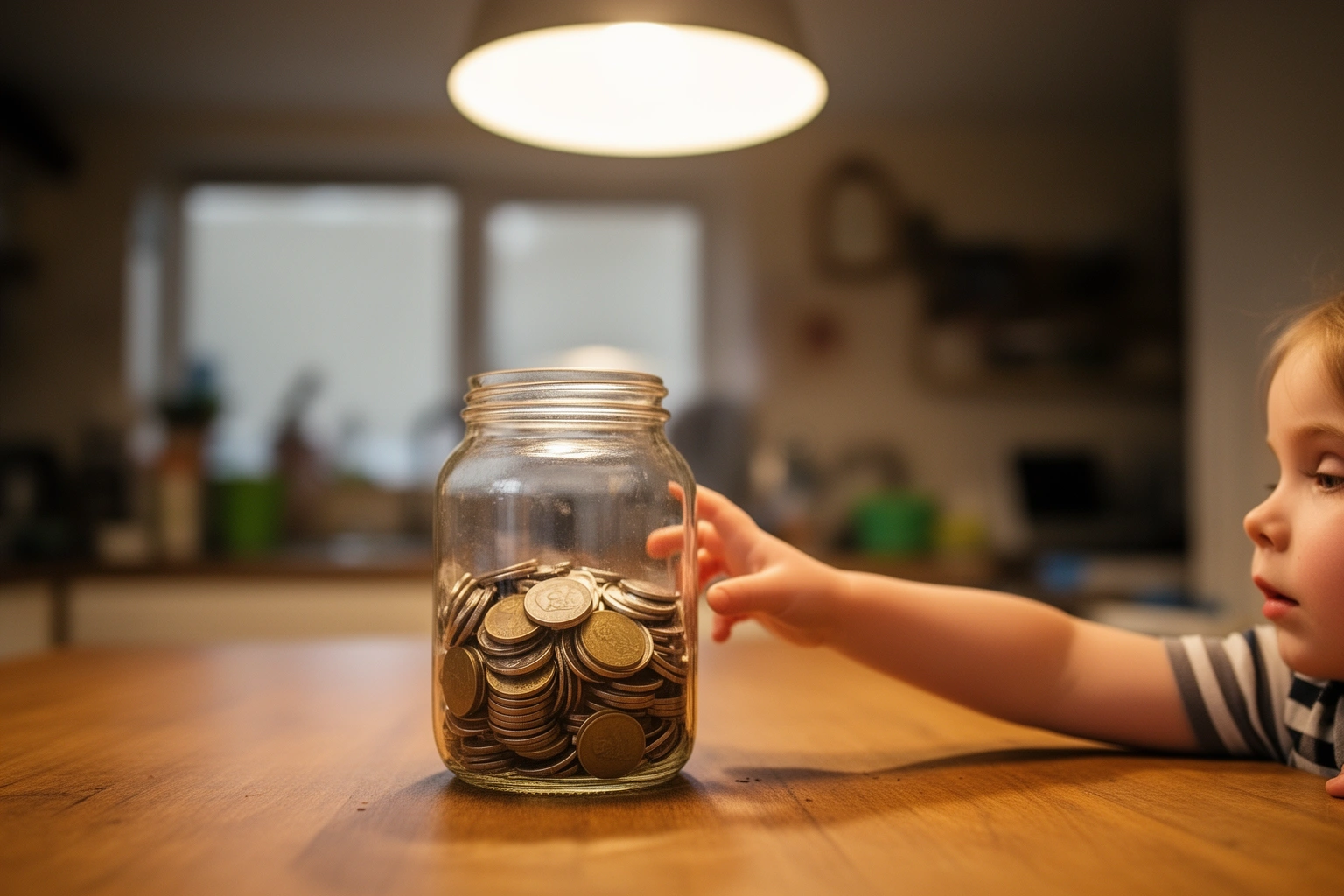
Natural Saver Traits Compared to Learned Saver Habits
Natural savers rely on inborn temperament to make saving feel effortless, while learned savers rely on structure and automation to produce the same results over time. Both paths lead to the same bank balance eventually.
| Trait | Natural Saver | Learned Saver |
|---|---|---|
| Source of habit | Personality, temperament | Systems, automation, practice |
| Effort required day to day | Low, feels automatic | Higher at first, decreases with repetition |
| Primary risk | Over-saving, missed opportunities | Abandoning the system under stress |
| Best support tool | Investment planning | Automatic transfers, visual trackers |
Researchers estimate personality traits tied to saving behavior come roughly half from genetics and half from environment and upbringing.
How to Build Saver Habits Even Without the Natural Instinct
Automatic transfers, visual progress tracking, and small achievable savings goals let anyone build a saver’s habits regardless of whether the instinct came naturally. The gap between natural and learned savers closes fast once a system replaces willpower.
Set up a recurring automatic transfer on payday so the decision to save never has to be made twice. This single step removes the daily willpower requirement that trips up most people who identify as natural spenders.
Start small enough that the goal feels achievable within weeks, not years. A person who has never saved consistently benefits more from a $20 monthly goal met every time than a $500 goal abandoned after six weeks.
Track progress somewhere visible. A savings app graph, a printed chart, or a jar filling with coins gives the brain the same feedback loop that naturally organized people already get from watching their bank balance grow steadily.
Frequently Asked Questions
Are good savers born that way?
Research estimates saving-related personality traits come from a roughly 50:50 split between genetics and environment, meaning natural savers exist but the habit can still be learned.
What is delayed gratification and why does it matter for saving?
Delayed gratification is the ability to choose a future benefit over an immediate reward, and it is considered the single biggest predictor of consistent saving behavior.
Does childhood really affect adult saving habits?
Childhood modeling has a strong measurable impact, since children raised watching consistent saving habits tend to internalize the same behavior as adults without ever being directly taught.
Can a natural spender become a good saver?
Yes, delayed gratification and financial discipline function like trainable skills, improving with consistent practice the same way physical flexibility improves with regular stretching.
What role does loss aversion play in saving behavior?
Loss aversion is a behavioral bias where the pain of losing money feels stronger than the pleasure of gaining an equivalent amount, and it nudges naturally loss-averse people toward saving.
What is the fastest way to build saving habits without natural discipline?
Automatic transfers remove the need to make a saving decision repeatedly, which closes most of the gap between people who find saving effortless and those who find it difficult.