Fun Facts About the History of Money

Money touches nearly every decision people make, yet most of its backstory stays hidden behind the coins and bills changing hands daily. From goddess-named currency to a $100,000 bill exchanged only between banks, the history of money is stranger and more inventive than the flat rectangles in a modern wallet suggest. These facts trace that story from cowrie shells to contactless payments.
Money Predates Coins by Thousands of Years
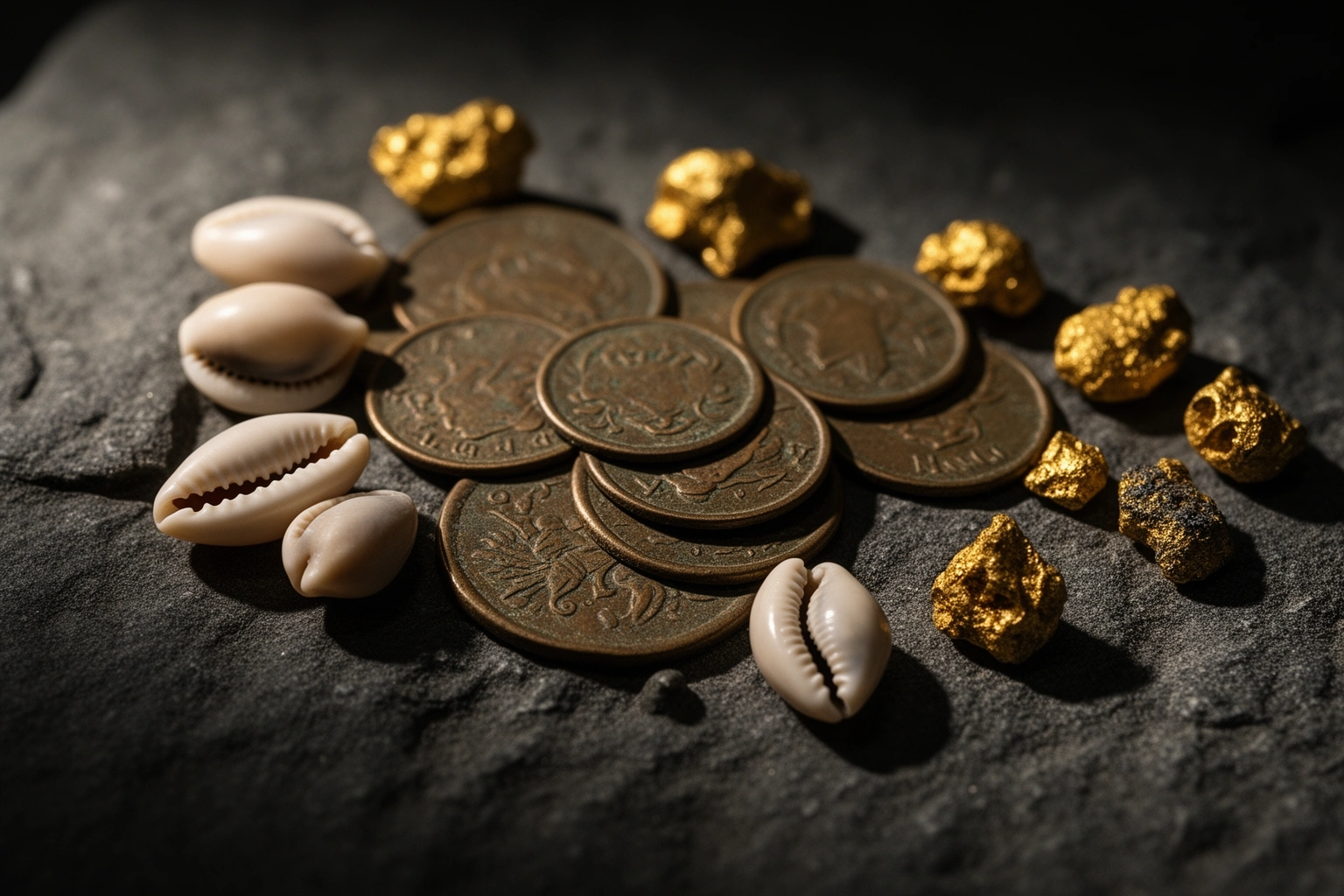
Humans used cowrie shells, livestock, and salt as currency for thousands of years before the first standardized coins appeared, with commodity money dating back to roughly 3,000 BCE in Mesopotamia. The idea that early humans simply bartered goods directly turns out to be largely a myth.
Cowrie shells became one of history’s longest-running currencies, prized for being small, durable, and naturally uniform in size. Their use stretched from the coastal waters of the Indian and Pacific oceans all the way into parts of Europe as trade networks expanded, and they remained in circulation in some regions for over 3,000 years.
Anthropological research also complicates the classic barter story. Rather than trading goods directly, many early societies ran on credit and social obligation systems, tracking who owed what long before physical currency existed to settle the debt.
The First Coins Came From a Kingdom in Modern Turkey
The kingdom of Lydia, located in present-day Turkey, issued the first standardized coins around the 7th century BCE, crude bean-shaped pieces made from electrum, a natural blend of gold and silver. These early coins carried the royal lion symbol of King Alyattes.
His son, King Croesus, later refined the system by separating gold and silver into distinct coin types, a shift so influential that “rich as Croesus” remains a phrase used today. Around the same era, China’s Yellow River valley independently developed bronze cast coins, showing the idea emerged in more than one region at roughly the same time.
The word “money” itself has ancient roots, coming from the Latin “moneta,” a title for Juno, the Roman goddess whose temple doubled as a mint for producing coins.
China Invented Paper Money Centuries Before Europe
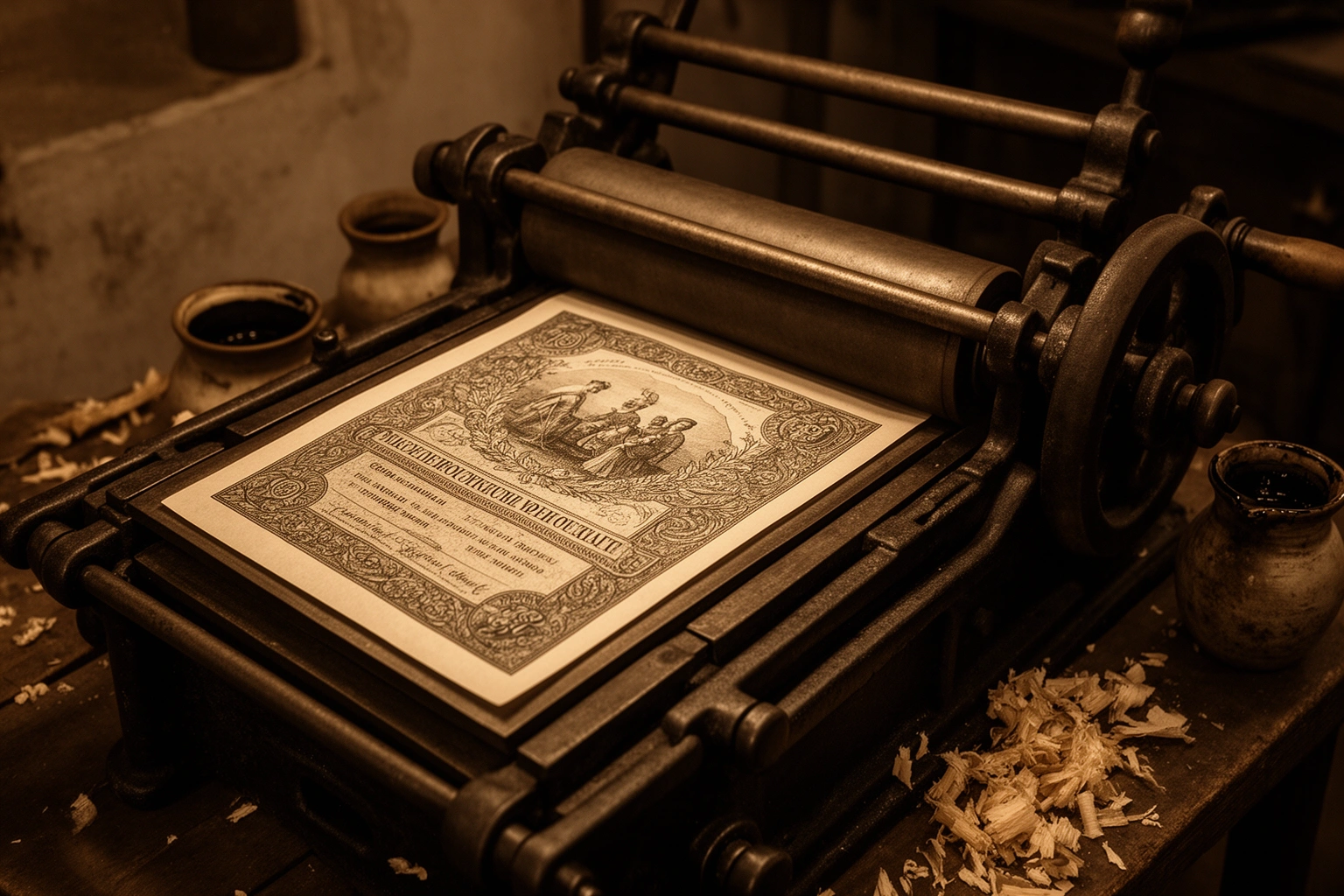
China introduced the first paper currency during the Tang Dynasty between 618 and 907 CE, roughly eight centuries before Sweden issued Europe’s first banknotes in 1661. The gap highlights how differently monetary innovation spread across regions.
The Tang Dynasty’s economy had outgrown its supply of low-value coins, prompting merchant guilds in Sichuan Province to experiment with contracts printed on mulberry bark, an early form of paper currency nicknamed “flying cash” for how easily it could be carried compared to heavy strings of coins.
Europe’s adoption lagged for centuries. Parts of the continent didn’t fully transition away from metal coins until the 16th century, and even then, the shift happened gradually rather than as a single turning point.
Counterfeiting Is Almost as Old as Money Itself
Counterfeiters have targeted currency since money first existed, prompting punishments ranging from decapitation in 14th-century China to burning at the stake in England. Every form of money invented a matching form of fraud almost immediately.
Benjamin Franklin, who ran a firm printing currency for several American colonies, reportedly misspelled “Pennsylvania” deliberately on purpose, betting that counterfeiters would unknowingly correct the error and expose their fakes in the process.
Modern currency compensates with far more elaborate defenses. The $20 bill, the most frequently counterfeited note in the United States, carries raised printing, a watermark, and a security thread visible only when held up to light.
Speaking of clay containers used to hold savings, the word “piggy bank” has nothing to do with actual pigs. It comes from “pygge,” an Old English term for the clay used to make jars, a fun etymological footnote worth remembering alongside the practical advice in how to make a piggy bank habit work as an adult.
Gold-Backed Currency Didn’t Last as Long as People Assume
The gold standard, where currency value was tied to a fixed quantity of gold, ended for good in 1971 when the United States abandoned the arrangement, ushering in the fiat currency system used worldwide today. Many assume gold-backed money lasted far longer than it actually did.
Spain’s conquest of the Aztec and Inca empires flooded Europe and China with gold and silver, triggering roughly a century of inflation because far more precious metal entered circulation than the economies could absorb. That historical episode foreshadowed a pattern still visible in modern currency crises.
Hyperinflation has produced some of history’s strangest banknotes as a direct result of currency losing its backing entirely. Zimbabwe issued a $100 trillion note in the early 2000s worth roughly the price of a loaf of bread, while Hungary printed a 100 quintillion pengő note in 1946, the largest denomination ever produced.

Physical Cash Has a Surprisingly Short Lifespan
A U.S. one-dollar bill lasts an average of only 18 months in circulation, while a hundred-dollar bill can last far longer since it changes hands less frequently. Money wears out faster than most people realize.
The constant churn keeps the Bureau of Engraving and Printing reprinting hundreds of millions of dollars in currency every year just to replace worn-out bills. Physical currency can also change hands up to 110 times annually, nearly twice a week, which explains why banknotes accumulate so much bacteria over their working life.
Coin production carries its own quirks. It currently costs the U.S. Mint more than two cents to produce a single penny, a cost imbalance that has pushed ongoing debate about discontinuing the coin altogether.
Key Milestones in the History of Money
From cowrie shells to contactless payment, money has changed form roughly a dozen major times across recorded history, each shift driven by a need for greater speed, trust, or portability. Tracking the timeline shows how consistently practicality has shaped currency.
| Era | Form of Money | Key Development |
|---|---|---|
| c. 3,000 BCE | Commodity money | Cowrie shells, livestock, salt used in Mesopotamia |
| 7th century BCE | Standardized coins | Lydia issues the first regulated electrum coins |
| 618-907 CE | Paper money | Tang Dynasty China introduces the first banknotes |
| 19th century | Gold standard | Currency value pegged to fixed gold quantities |
| 1967 | ATM banking | First ATM installed in Enfield, London |
| 1971 | Fiat currency | US ends the gold standard entirely |
| 2000s-present | Digital and mobile payments | Contactless, mobile wallets, and virtual currency emerge |
Projections show digital wallets reaching over 60% of the global population, continuing the same drive toward speed and portability that shaped every earlier form of money.
Money Keeps Reinventing Its Own Form
From cowrie shells to smartphone taps, every major shift in the history of money followed the same underlying pattern: people adopting whatever form of value transfer felt fastest, safest, and most trusted at the time. Digital currency is simply the newest chapter in a pattern thousands of years old.
Readers curious about the visual side of how money and personal style intersect can browse more curated inspiration over at AestheticPFPs, where historical trivia and modern aesthetics often collide in unexpected ways.
Western Union completed the first electronic funds transfer in 1860, using telegram technology decades before anyone imagined a smartphone. That single fact captures the entire arc of this story: money has never stopped changing shape, only the speed of the change has accelerated.
Frequently Asked Questions
What was the first coin ever made?
The kingdom of Lydia in present-day Turkey issued the first standardized coins around the 7th century BCE, made from electrum, a natural mix of gold and silver.
Which country invented paper money?
China introduced the first paper currency during the Tang Dynasty between 618 and 907 CE, roughly eight centuries before Sweden issued Europe’s first banknotes in 1661.
Why were cowrie shells used as money?
Cowrie shells were used as currency for thousands of years because they were small, durable, naturally uniform in size, and difficult to counterfeit compared to other early trade goods.
When did the gold standard end?
The gold standard ended in 1971 when the United States stopped pegging the dollar to a fixed quantity of gold, moving the world into the fiat currency system still used today.
How long does a dollar bill actually last?
A one-dollar bill lasts an average of about 18 months in circulation, while higher denominations like the hundred-dollar bill tend to last considerably longer.
Why is a piggy bank called a piggy bank?
The word comes from ‘pygge,’ an Old English term for the type of clay used to make jars and dishes, and has no historical connection to actual pigs.
Where does the word ‘money’ come from?
The word money comes from the Latin ‘moneta,’ a title for Juno, the Roman goddess whose temple was used as a mint to produce coins.