How to Mix Patterns Without Looking Overdone

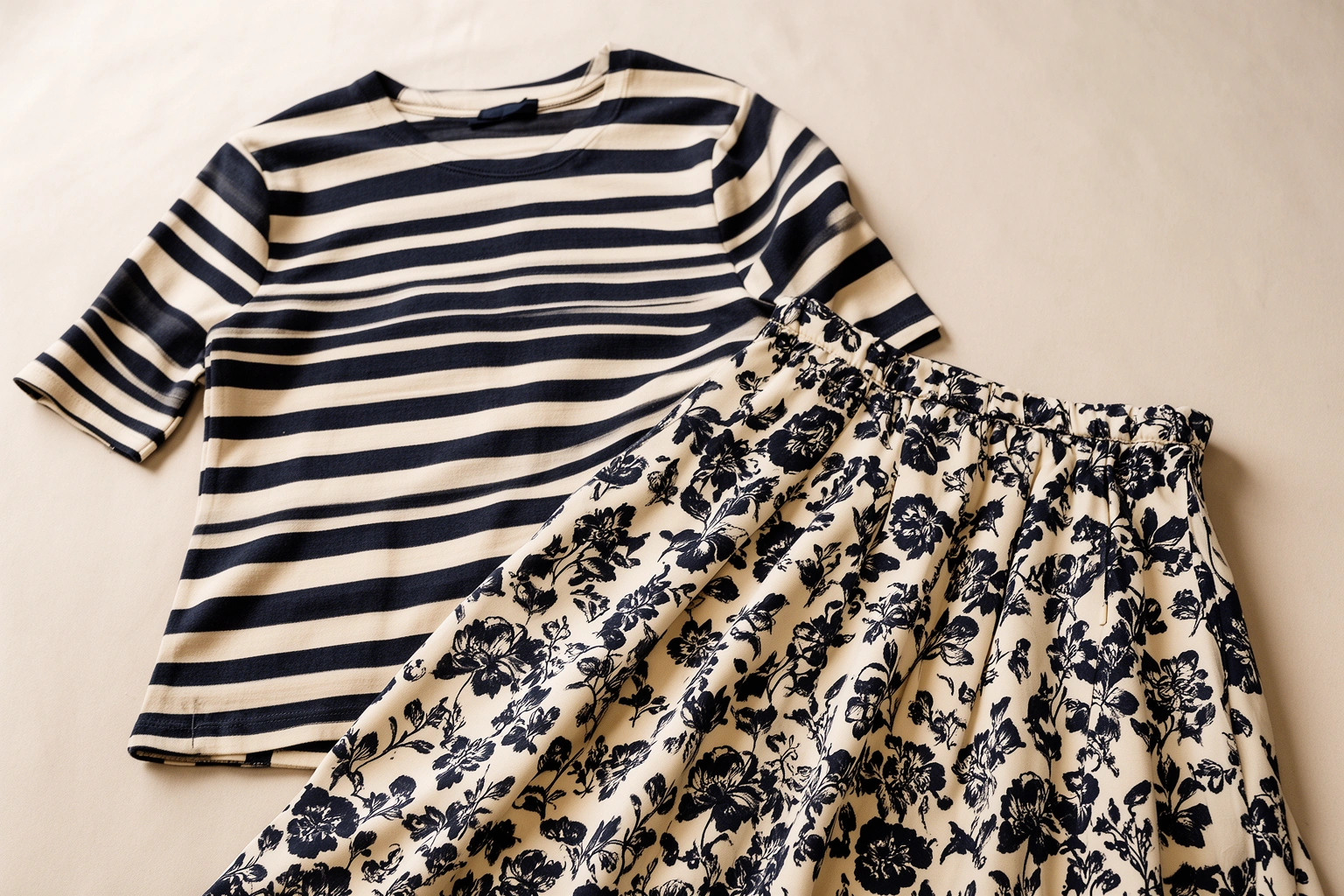
Mixing patterns without looking overdone comes down to three core principles: keep the patterns within the same color family, vary the scale so one print doesn’t compete directly with the other, and limit the mix to two patterns while a solid piece anchors the rest of the outfit. Once those fundamentals are in place, pattern mixing shifts from something that feels risky to a reliable way to make an outfit look more expensive and considered, using clothes already sitting in the closet.
None of this requires a rulebook mentality. It’s more like a recipe that gets adjusted through trial and error, not a rigid formula with only one right answer.
Start With a Shared Color Palette
Choosing patterns that share the same color family is the single most reliable way to make pattern mixing look intentional, since the shared color gives the eye an obvious reason the two prints belong together.
A darker plaid and a darker polka dot pattern naturally complement each other because they sit in the same tonal range, even though the actual prints look nothing alike. When in doubt, picking two completely different patterns that share the same colorway is close to a guaranteed win. This single trick removes most of the guesswork that makes pattern mixing feel intimidating in the first place.
Vary the Scale to Avoid Visual Competition
Pairing a large-scale pattern with a smaller-scale one keeps both prints readable instead of blurring together into visual noise, which is why scale matters just as much as color when combining patterns.
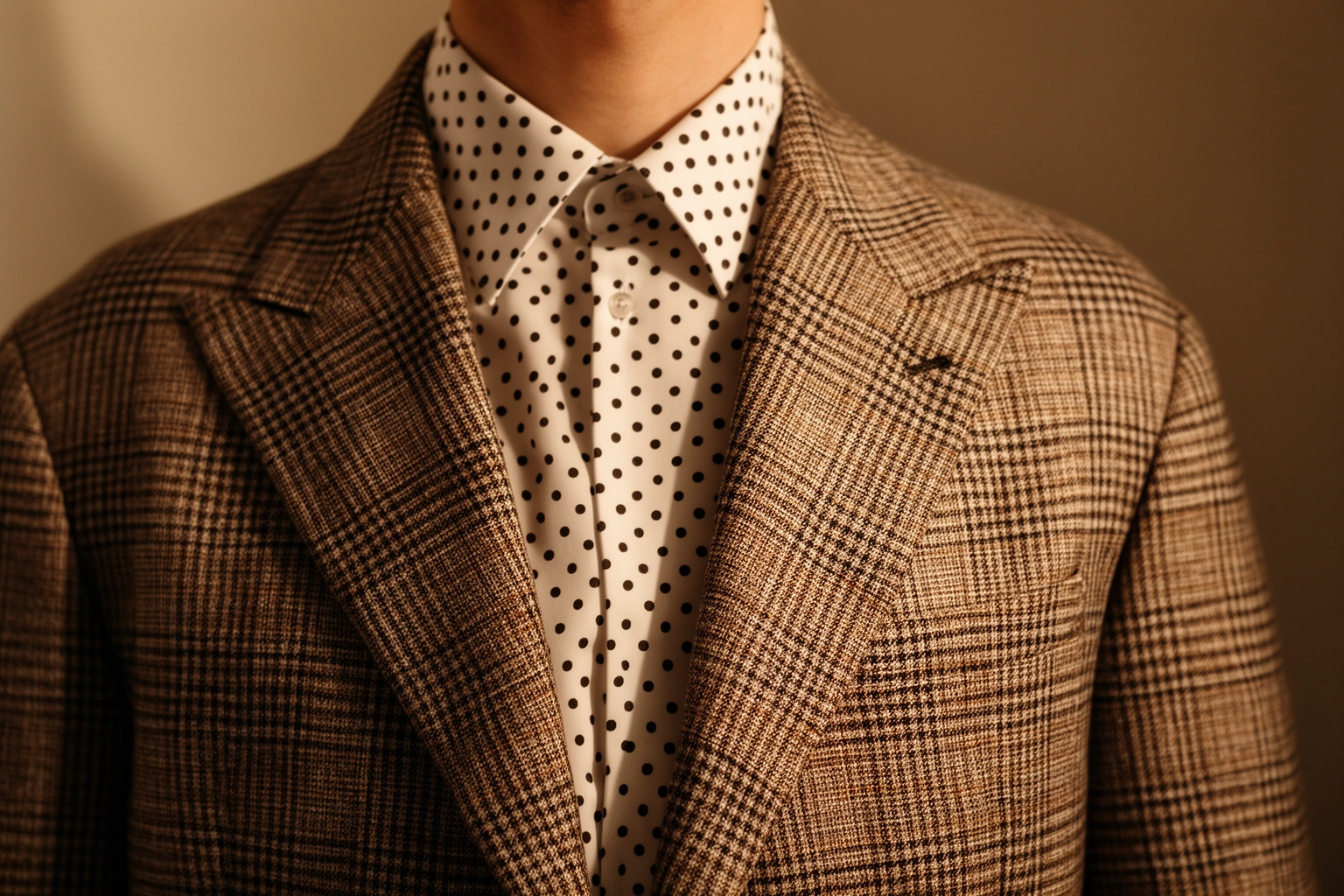
A bold floral print paired with a smaller stripe or check keeps the two prints from fighting for the same visual space. Small-scale patterns tend to read almost like a solid or a texture from a distance, which gives the larger, bolder print room to actually stand out. Two patterns of the exact same scale can still work, but it’s a more advanced combination that’s easier to get wrong when starting out, so leading with contrasting scales is the safer entry point.
Stick to Two Patterns Maximum
Limiting an outfit to two patterns, with a solid piece to anchor the rest, keeps the look from tipping into visual overload, since adding a third pattern is a genuinely advanced move that’s easy to get wrong.
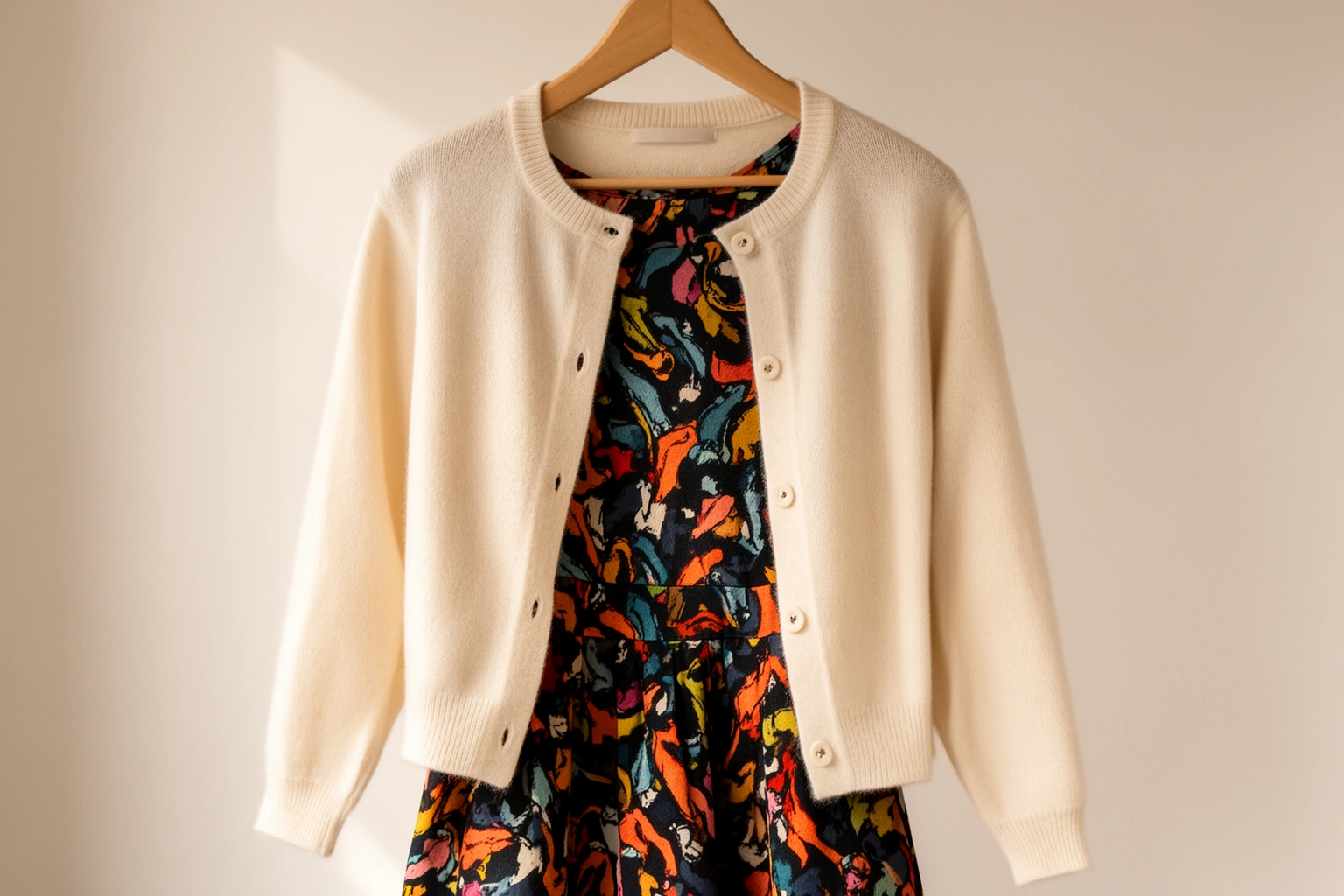
A solid blazer, cardigan, or jacket layered over two mixed patterns gives the eye a place to rest and keeps the overall look grounded rather than chaotic. This is one of the easiest fixes when a pattern-mixed outfit starts to feel like too much: adding one more neutral layer almost always tones it back down to something wearable rather than overwhelming.
Choose Patterns From Different Categories
Mixing patterns from different categories, stripes with dots, dots with checks, checks with florals, generally works better than combining two patterns from the same category, which tend to compete rather than complement each other.
Stripes function almost like a neutral in pattern mixing and pair well with nearly anything, florals, plaids, or polka dots included. Classic categories like polka dots, stripes, plaids, and animal prints are considered the safest entry point for anyone new to pattern mixing, since they’re familiar enough to combine predictably. Once those basics feel comfortable, mixing within the same category, two different plaids or two different florals, becomes a more advanced technique worth experimenting with.
Use Accessories to Ease Into Pattern Mixing
Pairing one patterned garment with a single patterned accessory, a scarf, bag, or pair of shoes, is the lowest-risk way to start mixing patterns before committing to two full patterned pieces of clothing.
Choosing a favorite printed top and adding one patterned accessory keeps the combination simple enough to build confidence. Once that pairing feels natural, the next step is combining two garments directly. It’s worth noting that if the clothing itself is already pattern-mixed, keeping jewelry and other accessories minimal helps prevent the whole look from tipping over into visual overload.
Layer Different Textures for Added Depth
Combining different fabric textures, smooth silk against rough tweed, or a knit against a woven print, adds visual interest and depth to a pattern-mixed outfit without necessarily adding another competing pattern.
Texture functions almost as a subtler cousin of pattern: corduroy, tweed, and knit ties all add visual complexity in a more understated way than a bold print does. Pairing a fabric with more depth or texture against a patterned piece often creates a more sophisticated finished look than simply piling on additional prints.
Quick Reference: Pattern Mixing Rules
| Do | Avoid |
|---|---|
| Stick to a shared color palette | Mixing patterns with unrelated color schemes |
| Vary the pattern scale | Combining two similarly sized bold prints as a beginner |
| Limit to two patterns | Adding a third pattern before mastering two |
| Add a solid neutral layer | Skipping a grounding piece in a bold mix |
| Keep jewelry minimal with pattern-heavy looks | Over-accessorizing an already busy outfit |
Because stripes are simple and geometric, they pair reliably with florals, plaids, and polka dots, making them one of the most forgiving starting points for anyone new to combining patterns.
Building Confidence With Pattern Mixing Over Time
Pattern mixing improves with repeated practice far more than it does with memorizing rules, so trying combinations, adjusting, and paying attention to what feels balanced matters more than following a fixed formula.
- Start with accessories, not full outfits: a patterned scarf or bag with a solid outfit builds confidence before combining two garments.
- Photograph the outfit before committing: a photo often reveals visual balance issues that aren’t as obvious in a mirror.
- Trust color as the connective thread: when two patterns feel wrong together, checking whether their colors actually match is usually the fix.
- Practice regularly: setting aside time to experiment with combinations in the closet builds the instinct faster than reading rules alone.
Pattern mixing works best as an extension of a wardrobe that’s already thoughtfully built, not a separate skill layered on top of a random closet. The same intentionality that goes into choosing the right accessories to elevate a simple outfit applies directly here: a few well-chosen patterned pieces in coordinating colors will do more for a wardrobe’s versatility than a large, uncoordinated collection ever could.
Frequently Asked Questions
What’s the easiest way to start mixing patterns?
The most reliable method is choosing patterns within the same color family, since a shared color palette makes even very different prints look intentional together.
How many patterns can I mix in one outfit?
Two is generally the recommended maximum for most outfits. Combining three or more patterns is considered an advanced technique that’s much easier to get wrong.
Why does pattern scale matter when mixing prints?
Pairing large-scale and small-scale patterns keeps both prints readable, since the smaller pattern reads almost like a texture and gives the bolder print room to stand out.
What patterns are easiest to mix for beginners?
Stripes act almost like a neutral in pattern mixing and pair reliably with florals, plaids, and polka dots, making them one of the most forgiving starting points.
How do I tone down a pattern mix that feels too busy?
Layer a solid blazer, cardigan, or jacket over the mixed patterns to ground the look, and consider keeping jewelry to a minimum to avoid piling on even more visual elements.
Can I mix two patterns from the same category, like two florals?
Yes, though it’s a more advanced technique since patterns of the same category and scale can compete visually. Varying the scale, a large floral with a smaller floral, helps it work.
Do textures count as part of pattern mixing?
Combining different textures, like smooth silk with rough tweed, adds visual depth to an outfit without requiring an additional competing print.