How to Start Journaling Without Overthinking It

The blank page is usually the biggest obstacle in journaling, not the writing itself. Most people who quit journaling early aren’t failing at the practice, they’re failing at an imagined standard of what a journal is supposed to look like. This guide strips journaling down to what actually works: low pressure, minimal structure, and permission to write badly.
Drop the Idea That Journaling Has a “Right” Way
Journaling has no required format, length, frequency, or quality standard, and the pressure to do it “correctly” is the single biggest reason beginners quit before the habit ever forms. There’s no rulebook being graded against.
Aesthetic journals seen online, color-coded, beautifully lettered, photographed for social media, represent a tiny, curated slice of what journaling actually looks like for most people. The real thing is often messy, scattered, and occasionally makes no sense even to the person who wrote it, and that’s completely normal.
Journaling is about expression, not presentation. Writing honestly in a way that reflects an actual thought process matters far more than whether the page looks good afterward.
Start With One Sentence, Not a Page
A single honest sentence is a complete, valid journal entry, and starting this small removes the intimidation of facing a blank page that feels like it demands to be filled. Length was never the point.
Something as simple as “Today I woke up tired but the coffee was good” counts as a real entry. On days with more to say, the writing naturally expands. On days without much mental bandwidth, one line is enough, and forcing more defeats the purpose entirely.
Setting a timer for just five minutes works well for anyone who tends to overthink the sitting-down part more than the actual writing. Once the timer starts, the goal becomes finishing the five minutes, not producing anything specific.
Use Stream of Consciousness to Bypass the Inner Critic
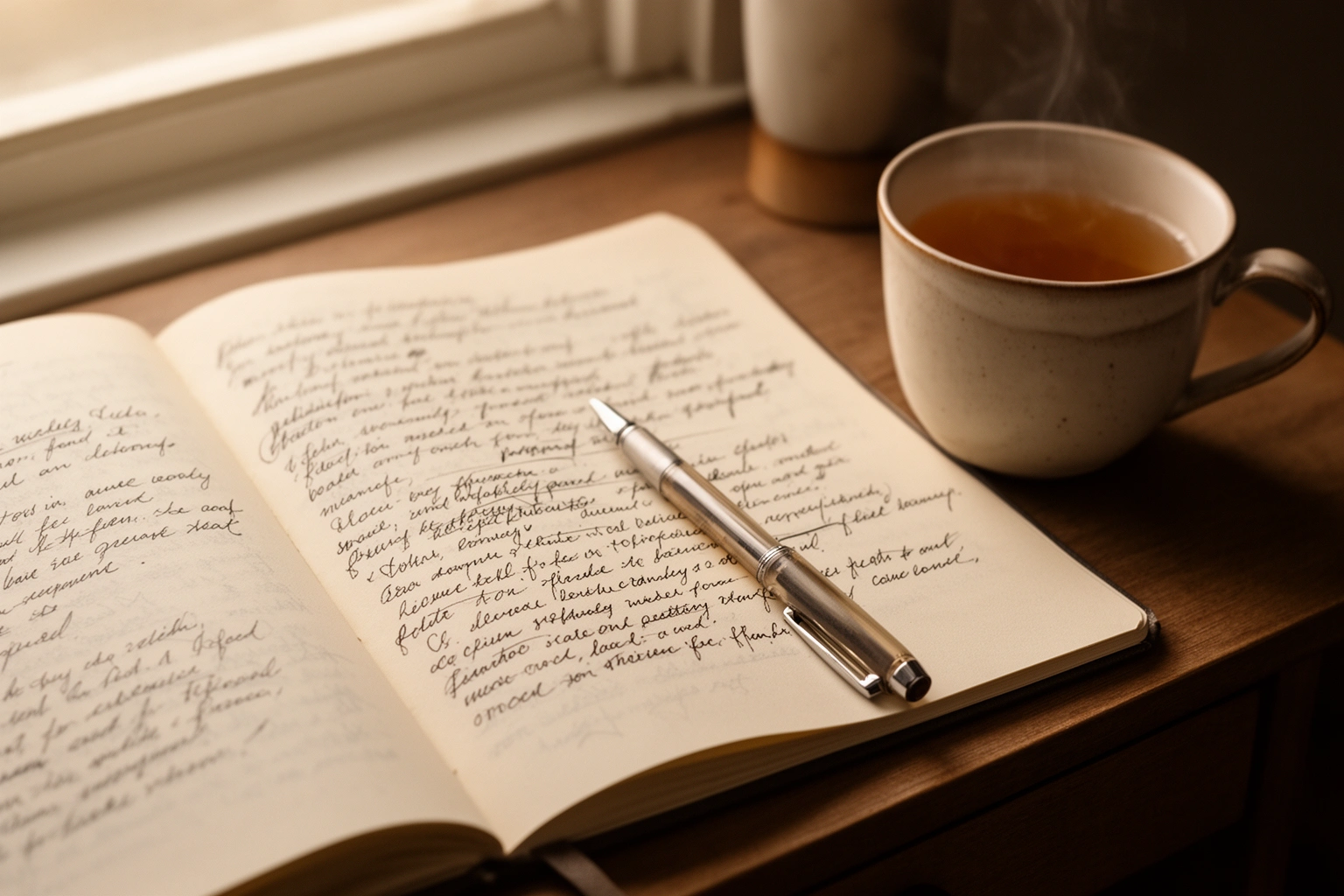
Writing continuously without stopping to edit, reread, or judge what comes out lets thoughts reach the page before the inner critic has a chance to filter them. This technique works specifically because it skips the self-censorship that stalls most beginners.
If nothing comes to mind, writing “I don’t know what to write” repeatedly until something shifts is a legitimate technique, not a failure. This mirrors the foundation of morning pages, a method built entirely around clearing mental clutter rather than producing insight.
Morning writing in particular takes advantage of a small neurological window: the brain’s self-censoring region is less active shortly after waking, before the day’s responsibilities have fully engaged the mind. Writing before checking a phone, even for a few minutes, tends to produce more honest material than writing later in the day.
Let Prompts Do the Work When the Page Feels Too Open
Simple guided prompts remove the pressure of deciding what to write about, which is often a bigger barrier than the writing itself for people who freeze in front of an open page. Structure can be a relief, not a constraint.
Gratitude journaling is widely recommended as a starting point specifically because it’s low effort and research-backed. Listing even one thing felt grateful for that day has been shown to meaningfully improve emotional regulation and overall wellbeing over time.
Other reliable starting prompts include describing the day’s events plainly, without needing to extract any deep meaning, or answering something as simple as “how am I feeling right now.” These low-stakes entry points build the habit before anything more reflective feels necessary.
Attach Journaling to Something Already Happening
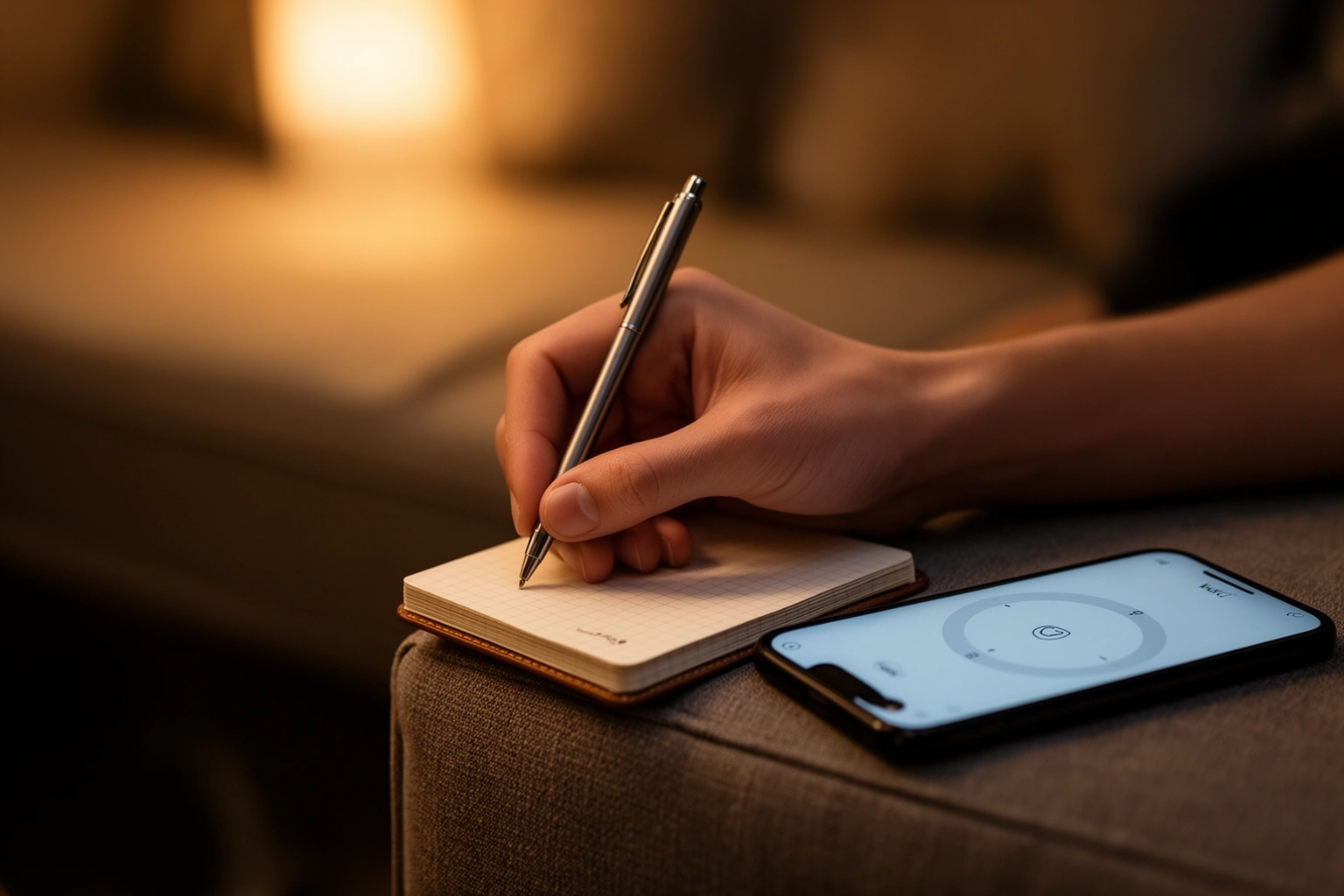
Habit stacking, attaching a new journaling habit to an existing daily routine, removes the daily decision of whether to write, which is one of the biggest reasons new habits fail. Decision fatigue kills more habits than lack of discipline does.
A simple structure like “after I make my morning coffee, I’ll write for five minutes before I sit down to drink it” creates a complete habit loop: cue, routine, reward. The existing coffee habit becomes the reminder, removing the need to consciously decide each day.
Missing days is expected and doesn’t mean the habit has failed. Consistency of intention, returning to the notebook when something’s on your mind, matters more than a rigid daily streak that collapses the first time life gets busy.
Skip Words Entirely If That’s What Feels Right
Doodling, collaging, or making a playlist can capture the same emotional processing as written journaling for people who find words difficult to access in the moment. Journaling was never strictly defined as writing.
Sometimes there simply aren’t words that do justice to a specific feeling, and creative alternatives can bypass that gap entirely. This matters especially on days when emotions feel too raw or complicated to articulate directly in sentences.
Anyone who’s already carved out unstructured personal time through something like fun weekend activities that don’t cost money already has a natural window for this kind of low-pressure reflection, since journaling costs nothing and fits easily into a quiet afternoon.
Choose the Format That Actually Gets Used
A notebook, a notes app, sticky notes, or a voice memo are all equally legitimate journaling tools, and the “best” one is whichever format someone will actually reach for consistently. The tool matters far less than showing up.
| Format | Best For |
|---|---|
| Physical notebook | Slowing down, deeper reflection |
| Notes app or digital journal | Privacy concerns, always-on-hand access |
| Voice memo | When writing feels like too much effort |
| Sticky notes or scrap paper | Quick, single-thought entries |
Research from psychologist James Pennebaker found that writing about thoughts and feelings for this long reduces measurable stress markers and improves psychological wellbeing.
Let Old, Unfinished Journals Off the Hook
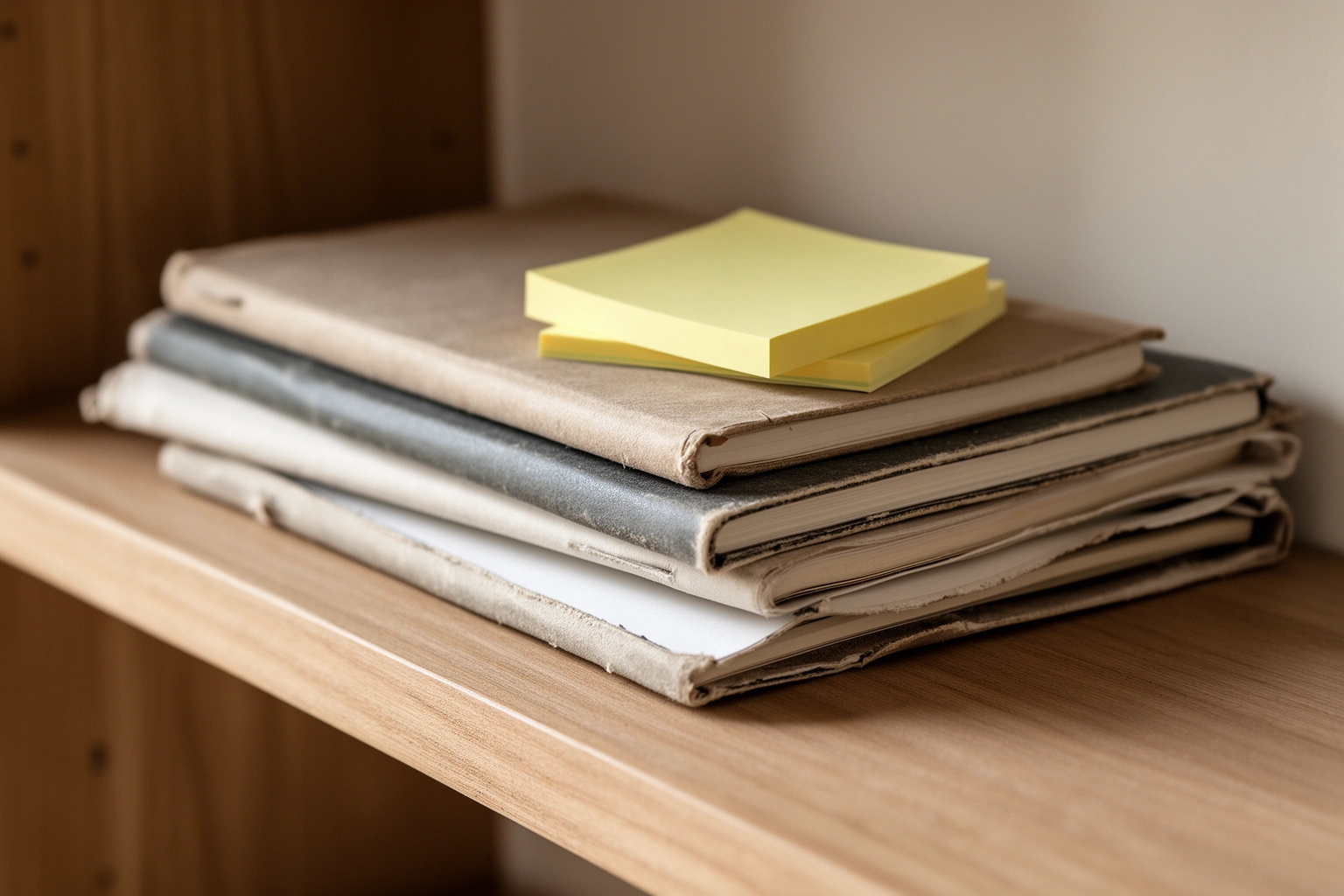
Half-filled notebooks from past journaling attempts aren’t evidence of failure, they’re normal byproducts of experimenting with a personal practice that takes time to find its shape. Most consistent journalers have a stack of abandoned notebooks somewhere.
Keeping past attempts in one accessible spot, rather than scattered or hidden away out of guilt, removes the shame of restarting. Old entries still hold value even if the habit lapsed, and skimming through them before deciding what to keep can offer surprising perspective on how much has changed.
Readers looking for more low-pressure, realistic approaches to everyday self-care can find additional inspiration on AestheticPFPs, where simple habits get the same honest, no-perfectionism treatment as journaling deserves.
This is a sensitive topic for some readers. If journaling brings up feelings that feel overwhelming or difficult to manage alone, reaching out to a mental health professional is a reasonable and valuable next step.
Frequently Asked Questions
Is one sentence enough to count as journaling?
A single honest sentence is a complete, valid journal entry, and there is no minimum length required for journaling to count or provide benefit.
What’s the best journaling technique for beginners who freeze up?
Stream of consciousness writing, where you write continuously without stopping to edit or judge what comes out, is one of the most effective ways to bypass the inner critic that causes blank-page freezing.
Do I need a physical notebook to start journaling?
No, physical notebooks, notes apps, voice memos, and even sticky notes are all legitimate journaling formats, and the best one is whichever gets used consistently.
How do I make journaling a consistent habit?
Attaching journaling to an existing daily habit, like writing for five minutes after making morning coffee, removes the daily decision of whether to journal, which reduces the decision fatigue that causes most habits to fail.
What should a complete beginner write about first?
Gratitude journaling, where you list even one thing you’re grateful for that day, is widely recommended as a low-effort, research-backed starting point for beginners.
Can journaling work without writing full sentences?
Yes, doodling, collaging, or making a playlist can capture the same kind of emotional processing as written journaling, especially on days when words feel hard to access.