Simple Ways to Make Your Car Smell Fresh Without Air Fresheners

Air fresheners mask odors instead of removing them, which is why a car can still smell off underneath the pine or vanilla scent. The simplest way to make a car smell fresh without air fresheners is to eliminate the source of the odor first, then use natural absorbers like baking soda, activated charcoal, or coffee grounds to neutralize what’s left in the carpet and upholstery.
None of the methods below require special equipment or a trip to the detail shop. Most use items already sitting in a kitchen cabinet.
Remove the Source Before Trying to Cover the Smell
No natural remedy works long-term if the source of the odor, trash, spills, or food residue, is still sitting in the car, so a quick declutter always comes first.
Old coffee cups, fast food bags, and gym clothes are the most common culprits, and they keep producing odor as long as they’re in the cabin. Wrappers and crumbs wedged between seats and in door pockets are easy to miss during a quick clean but are often the actual source of a lingering smell.
A five-minute sweep of the floor mats, seat pockets, and center console before doing anything else usually solves more of the problem than people expect.
Let Fresh Air Do the First Round of Work
Rolling down the windows for even a few minutes a day flushes out stale, trapped air and is the fastest, completely free method for reducing car odor.
Parked cars build up heat and humidity, both of which intensify smells that would otherwise stay mild. Cracking the windows when it’s safe to park that way lets that trapped air escape instead of settling into the fabric over time.
Running the HVAC system on fresh-air intake rather than recirculate mode for a few minutes before a drive also clears out musty air sitting in the vents, which is a common source of a stale smell that has nothing to do with the seats or carpet at all.
Baking Soda: The Most Effective Odor Absorber
Baking soda neutralizes odors at a chemical level instead of masking them, which makes it more effective than most spray-based alternatives for carpets and upholstery.
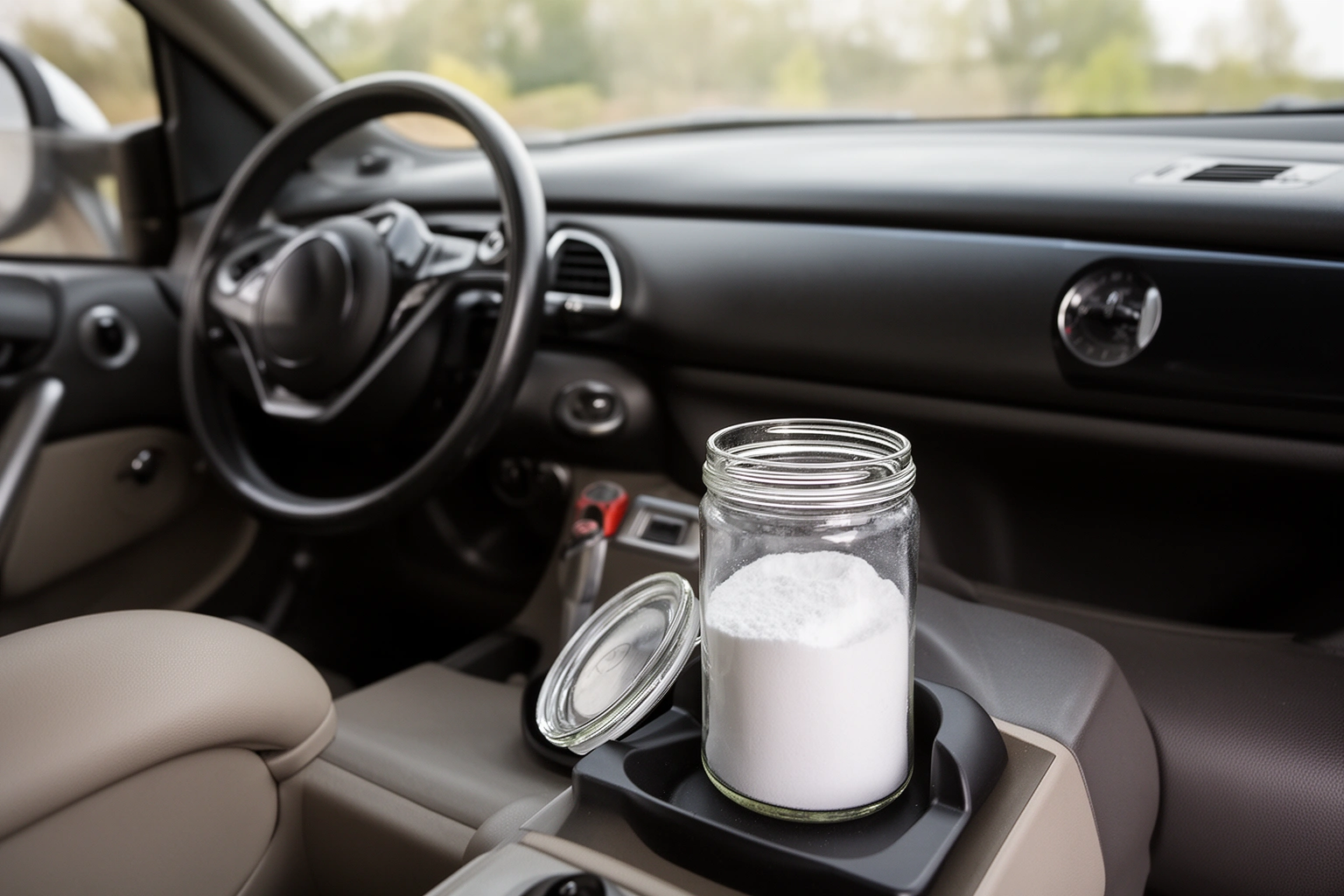
Sprinkle a light, even layer over carpets and fabric seats, let it sit for several hours or overnight, then vacuum it up completely. For an ongoing, low-effort fix, an open container or a mason jar with holes punched in the lid can sit in a cupholder and continue absorbing odor between deeper cleans.
Baking soda works especially well on musty or lingering smells since it pulls moisture out of fabric along with the odor itself, addressing both problems at once.
Activated Charcoal and Coffee Grounds
Activated charcoal bags placed under seats or in door pockets absorb odor continuously for weeks, while dry coffee grounds work faster for a short-term reset before a drive.
Activated Charcoal
Small charcoal bags are designed to sit quietly in a corner of the car and pull odor-causing particles out of the air over time. They don’t add a scent of their own, which makes them useful for anyone who wants a genuinely neutral-smelling car rather than one that just smells like something new.
Coffee Grounds
Unused, dry coffee grounds tied into an old sock or placed in a small breathable bag work similarly to charcoal, though the effect fades faster and needs replacing every week or two. It’s a reasonable trick for someone who wants a subtle coffee scent rather than a completely neutral cabin.
Essential Oils and Dryer Sheets for a Light Natural Scent
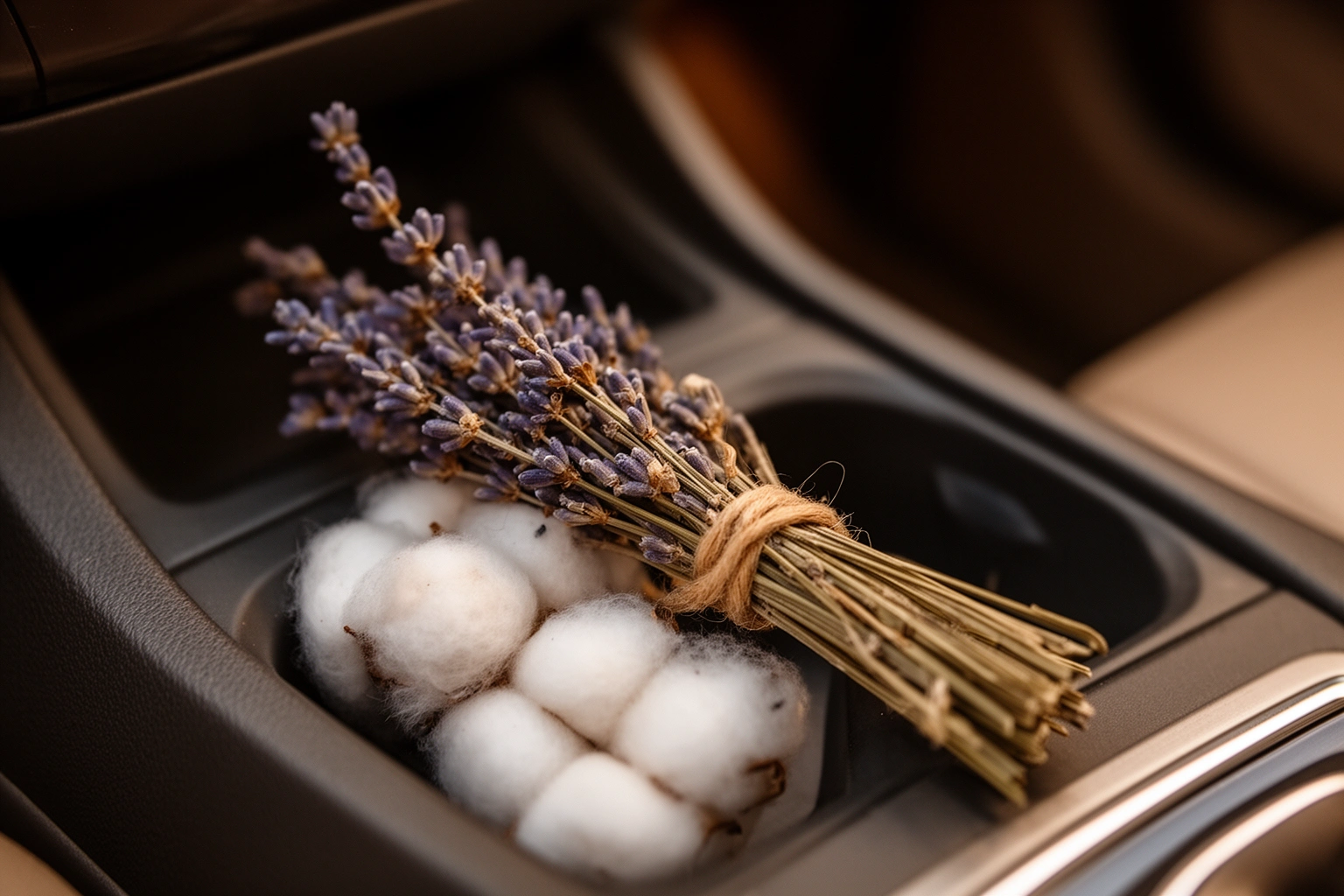
A few drops of essential oil on a cotton ball, or a couple of dryer sheets tucked under the seats, add a mild, natural scent without the synthetic smell of a store-bought air freshener.
- Citrus (lemon, orange): light and energizing, works well for daily commutes.
- Lavender: calming, tends to suit longer or slower drives.
- Peppermint: good for staying alert, and useful for passengers prone to carsickness.
- Dryer sheets: tuck one or two under the front seats or in the glove box, and replace every two to three weeks.
A few drops of oil go a long way. Oversaturating a cotton ball can tip into the same overwhelming effect as a synthetic air freshener, which defeats the point of going natural in the first place.
Vinegar for Stubborn or Musty Smells
A small bowl of white vinegar left in a closed car overnight absorbs strong, musty odors more effectively than most spray-on solutions, though the bowl needs to be removed before driving.
Vinegar works well specifically on smells caused by moisture or mildew, which baking soda can also help with but doesn’t always fully resolve on its own. Combining the two, vinegar overnight followed by a baking soda treatment the next day, handles most stubborn odors without needing anything store-bought.
Clean the Vents and Cabin Air Filter
A musty smell that doesn’t respond to any interior cleaning is often coming from the vents or a clogged cabin air filter rather than the seats or carpet.
Dust, pollen, and moisture build up in the HVAC system over time, especially in humid climates, and a clogged filter recirculates that stale air every time the fan runs. Replacing the cabin air filter according to the car’s maintenance schedule and giving the vents a quick vacuum or blast of compressed air resolves odors that seem to come from nowhere.
Prevent Odors Before They Start
The easiest way to keep a car smelling fresh long-term is to stop odors before they set in, mainly by avoiding eating in the car and clearing out trash daily.
| Habit | Why It Matters |
|---|---|
| No eating in the car | Food smells and crumbs are one of the most common sources of lingering odor |
| Clean up spills immediately | Spills that soak into carpet or upholstery are much harder to remove once dried |
| Clear trash daily | Wrappers and cups left overnight are a fast track to a stale-smelling cabin |
| Avoid smoking in the car | Smoke clings to fabric and plastic and is one of the hardest smells to fully remove |
| Dry out wet gear promptly | Damp shoes, towels, or umbrellas left in the car encourage musty, mildew-like smells |
Baking soda for daily upkeep plus a vinegar treatment for deep odors covers nearly every common car smell without a single synthetic spray.
Keeping the cabin clean and odor-free tends to go hand in hand with keeping the exterior in good shape too. Owners who stay on top of interior upkeep are often the same ones paying attention to things like which paint colors hold up best over time, since both habits come from wanting the car to look and feel cared for inside and out.
Frequently Asked Questions
What is the fastest way to make my car smell fresh without air fresheners?
Remove trash and clean up spills first, then use baking soda on carpets and seats to absorb odors at the source rather than masking them.
How do I use baking soda to freshen my car?
Sprinkle baking soda over the carpet and seats, let it sit for a few hours or overnight, then vacuum it up completely.
What natural odor absorbers work best in a car?
Activated charcoal bags tucked under the seats or in door pockets absorb odor-causing particles continuously for several weeks without adding any scent of their own.
Why does my car smell musty even after cleaning it?
It usually means the cabin air filter is clogged or the vents have trapped moisture, which recirculates stale air every time the fan runs.
Can vinegar remove bad smells from a car?
Place a small, uncovered bowl of white vinegar in the car overnight, then remove it before driving. It works especially well on moisture-related and musty odors.
Is coffee more effective than baking soda for car odors?
Yes, in most cases. Coffee grounds provide a quick, temporary scent boost, but activated charcoal and baking soda are more effective for actually neutralizing odors long-term.
How can I prevent bad smells in my car before they start?
Avoid eating in the car, clear out trash daily, clean up spills immediately, and dry out any wet gear like shoes or towels before it develops a musty smell.