Simple Morning Stretches to Feel More Awake

Groggy mornings usually have less to do with sleep quality and more to do with a body that hasn’t moved in eight hours. A short stretching routine gets blood and oxygen flowing to the brain and muscles, often working faster than a second cup of coffee. These stretches take less than ten minutes and require nothing but a bit of floor space.
Why Stretching Wakes the Body Up Faster Than Coffee
Morning stretching increases blood flow and delivers oxygen-rich blood to the brain and muscles, producing alertness without the jittery crash that comes later with caffeine. The body has spent hours completely still, and movement is what signals it’s time to switch on.
After a night of stillness, muscles and joints stiffen from lack of circulation, not from anything wrong with how someone slept. Gentle movement in those first few minutes restores blood flow to areas that went quiet overnight, particularly the spine, shoulders, and hips.
Stretching also lowers cortisol and calms the nervous system when paired with slow, intentional breathing, which explains why a five-minute routine can leave someone feeling clearer and calmer, not just more limber.
Start in Bed Before Standing Up
The first stretches of the day work best done lying down, since bed-based movement transitions the body gently from rest into motion without any pressure to get up immediately. Getting out of bed too fast skips the body’s natural warm-up phase.
Lie flat and reach both arms overhead while pointing the toes in the opposite direction, creating one long stretch through the entire spine. Hold for five to ten seconds, breathe deeply, and repeat once more if it feels good.
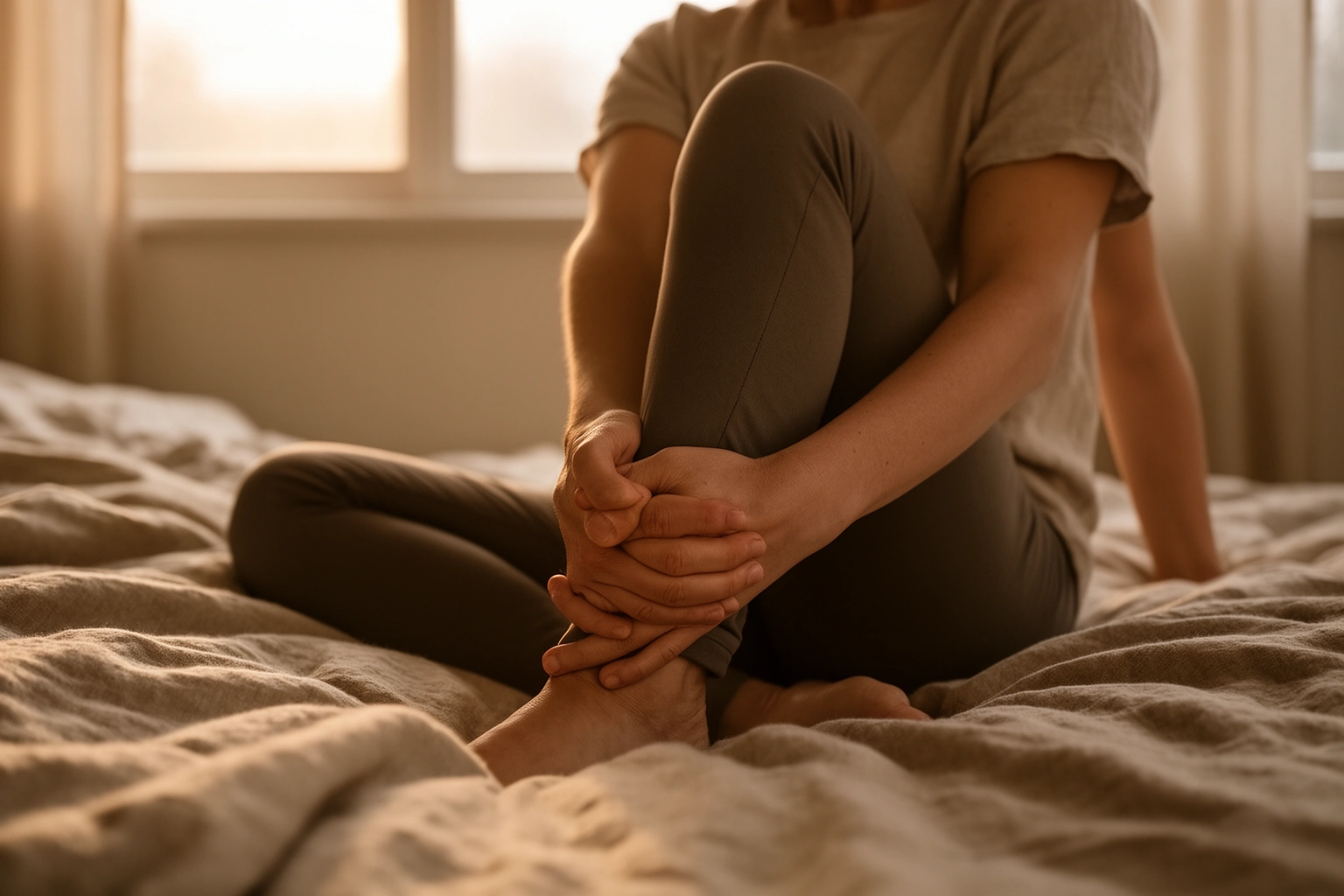
Bring one knee to the chest and hold it with both hands for a few breaths, then gently roll that same knee across the body toward the opposite side while keeping both shoulders flat on the mattress. This eases lower back tension built up from a fixed sleeping position, and switching sides gives both hips equal attention before ever touching the floor.
Cat-Cow for the Spine
Cat-Cow is one of the most effective wake-up stretches because it moves the entire spine through both flexion and extension, increasing circulation of spinal fluid in a single fluid motion. It works well on a mat or directly on the mattress.
Get on all fours with hands under the shoulders and knees under the hips. Inhale while dropping the belly, lifting the chest, and looking gently upward, this is Cow. Exhale while rounding the spine toward the ceiling and tucking the chin toward the chest, this is Cat.
Flow slowly between the two positions for five to ten breaths, matching each movement to the inhale and exhale rather than rushing through repetitions. This single stretch touches the neck, shoulders, and lower back all at once, making it one of the most efficient moves in a short morning routine.
Standing Forward Fold to Send Blood to the Brain
The standing forward fold sends oxygen-rich blood directly to the head, a mild inversion that clears grogginess faster than almost any other stretch on this list. It requires zero equipment and works in any small space.
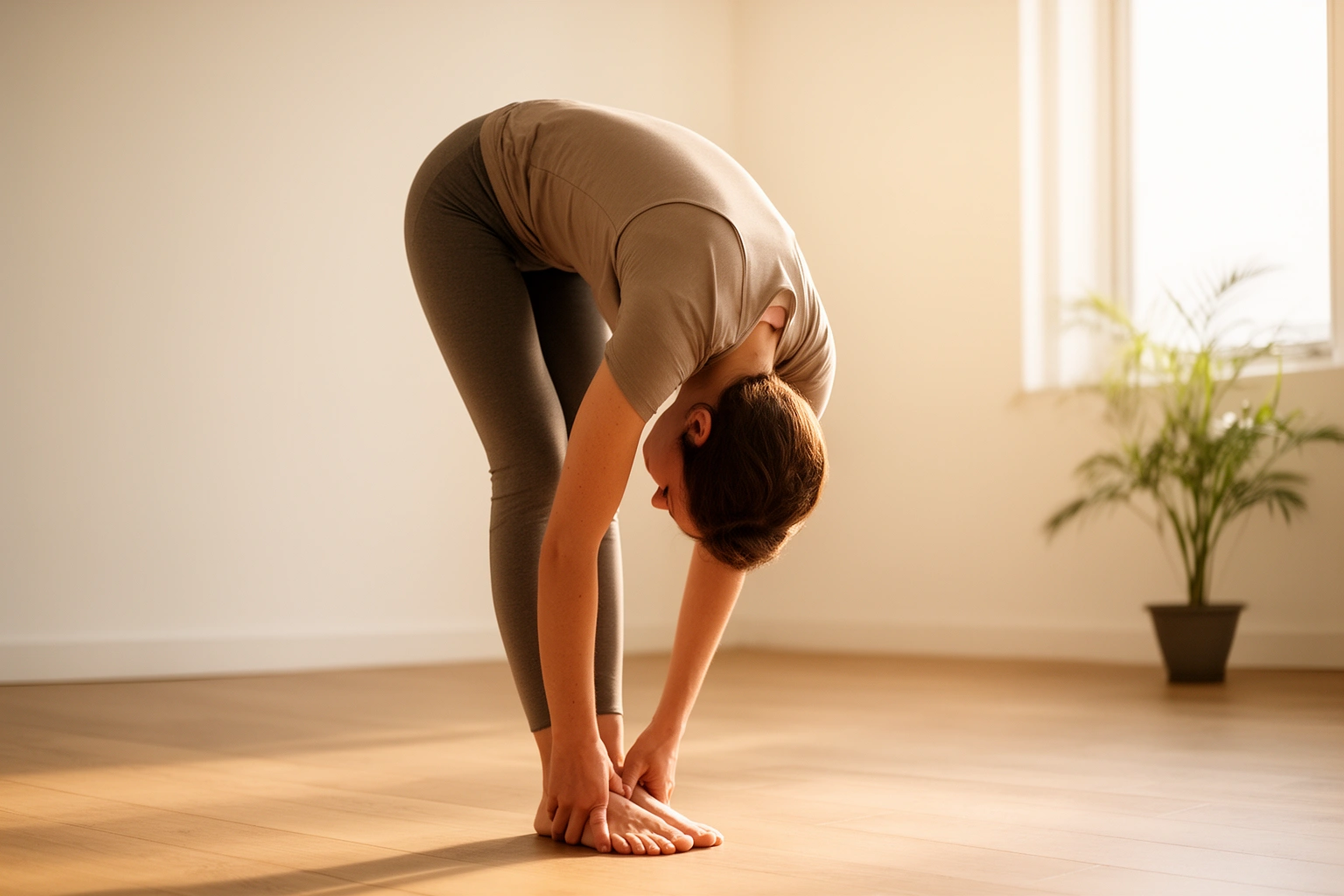
Stand with feet hip-width apart, slowly hinge forward from the hips, and let the head hang heavy toward the floor. Bend the knees slightly if the hamstrings feel tight, since the point is a relaxed release, not a forced stretch to touch the toes.
Hold for fifteen to twenty seconds, letting gravity do most of the work, then roll back up slowly one vertebra at a time to avoid any head rush. This stretch also targets the hamstrings, calves, and lower back, all areas that tend to feel stiff after a night of stillness.
Overhead Side Reach and Seated Twist
A standing side reach paired with a seated spinal twist rounds out a morning routine by loosening the ribcage, waistline, and mid-back, areas most stretching routines skip entirely. Both moves take under a minute combined.
Stand with feet hip-width apart, clasp both hands overhead, and lean gently to one side, feeling the stretch run along the ribcage and waist. Pause, return to center, and repeat on the opposite side, doing this eight to ten times per side for a gentle full-body wake-up.
Sit cross-legged or with legs extended, place one hand behind the body and the other on the opposite knee, then twist gently toward the back hand while keeping the spine tall. Hold for fifteen seconds per side. This move also tends to stimulate digestion, which is useful for anyone who wakes up feeling bloated or sluggish.
Anyone who still feels foggy even after a full stretch sequence isn’t imagining it. That lingering grogginess connects to the same brain mechanisms covered in why yawning is contagious: the science explained simply, since both stretching and yawning appear to serve a similar alertness-boosting function in the body.
Building a Routine That Actually Sticks
A morning stretch routine works best when it’s short, consistent, and phone-free, since even two minutes done daily beats a longer routine attempted only occasionally. Consistency matters more than covering every possible stretch.
| Stretch | Primary Area | Time |
|---|---|---|
| Overhead reach in bed | Full spine | 10 seconds |
| Knee-to-chest twist | Lower back, hips | 20 seconds per side |
| Cat-Cow | Full spine, neck | 30-45 seconds |
| Standing forward fold | Hamstrings, brain blood flow | 15-20 seconds |
| Overhead side reach | Ribcage, waist | 8-10 reps per side |
| Seated spinal twist | Mid-back, digestion | 15 seconds per side |
A full morning stretch sequence covering the spine, hips, hamstrings, and shoulders takes less time than brewing a pot of coffee.
Skip the phone during this window entirely. Reaching for email or social media first thing raises stress and anxiety before the day even starts, while a few unplugged minutes of movement sets a steadier, more focused tone. Stretching should never cause sharp pain, so ease off anywhere that feels tight rather than pushing through discomfort, and check with a doctor first if there’s an existing injury involved.
Readers who enjoy building small, intentional morning rituals like this one can browse more everyday wellness inspiration on AestheticPFPs, where simple habits get the same practical treatment.
Frequently Asked Questions
Do morning stretches really help you feel more awake?
Morning stretching increases blood flow and oxygen delivery to the brain and muscles, producing alertness without the jittery energy crash that often follows caffeine.
How long should a morning stretch routine take?
A full effective routine covering the spine, hips, hamstrings, and shoulders can be completed in under 10 minutes, and even 2 minutes daily makes a noticeable difference.
What is the best stretch for waking up quickly?
The standing forward fold is considered one of the most effective, since it functions as a mild inversion that sends oxygen-rich blood directly to the head.
Can stretching be done while still in bed?
Yes, gentle bed-based stretches like knee-to-chest twists and overhead reaches ease the body from rest into movement without requiring anyone to stand up first.
Is it safe to stretch every morning?
Stretching should never cause sharp pain, so anyone with an existing injury should check with a doctor or physiotherapist before starting a new stretching routine.
Why is Cat-Cow considered such an effective morning stretch?
Cat-Cow moves the entire spine through both flexion and extension in one motion, touching the neck, shoulders, and lower back simultaneously, making it one of the most time-efficient stretches available.