How to Build a Capsule Wardrobe on a Budget

A capsule wardrobe on a budget starts with what’s already in the closet, not a shopping trip. The core process is simple: sort through existing clothes, invest gradually in versatile neutral basics, and lean on thrifting, sales, and the cost-per-wear rule to fill gaps without overspending. Most capsule wardrobes land between 25 and 50 pieces total, and building one on a tight budget just means moving toward that number slowly instead of all at once.
The biggest mistake people make is treating a capsule wardrobe like an overnight makeover. It works best as a gradual process spread across weeks or months.
Start By Sorting What You Already Own
Before spending a single dollar, sorting through the entire closet into keep, donate, and discard piles reveals exactly what’s missing, which prevents buying duplicates of things already owned.
Keep pieces that fit well, are in good condition, and visually work with other items already in the closet. This step alone often uncovers a surprising number of usable basics that just needed to be seen clearly instead of buried under clothes that don’t get worn. If there are five solid-colored tops but almost no pants that go with them, that gap becomes the actual shopping list, rather than guessing at what “should” be included based on a generic checklist.
Build Around a Neutral Color Palette
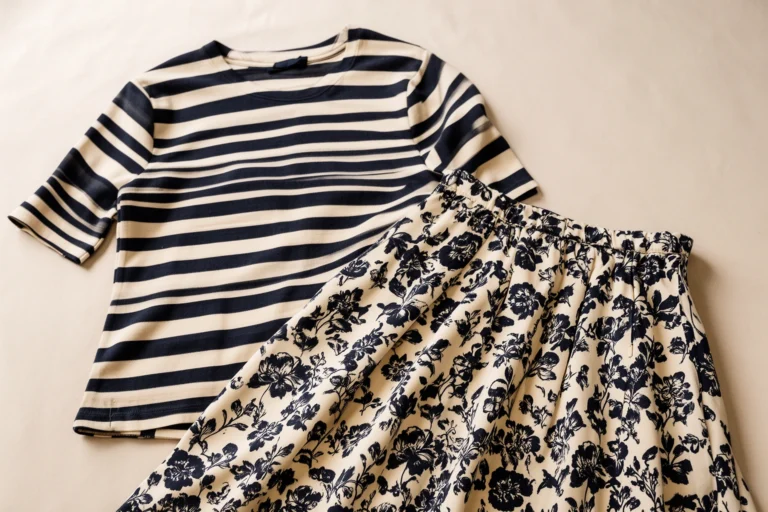
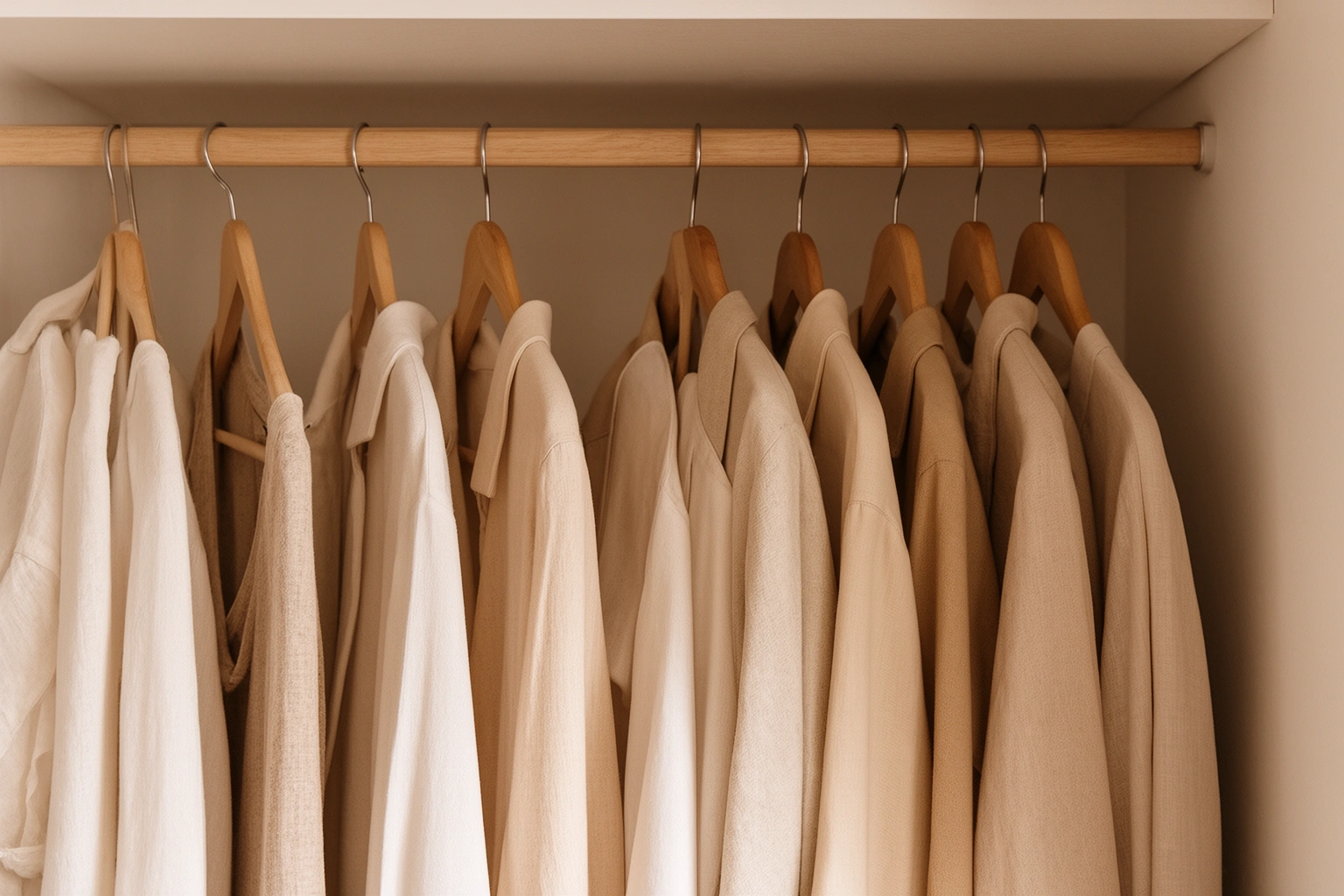
Sticking to a small palette of neutrals, black, navy, gray, camel, cream, and white, makes nearly every piece interchangeable, which is what allows a small wardrobe to produce dozens of outfit combinations.
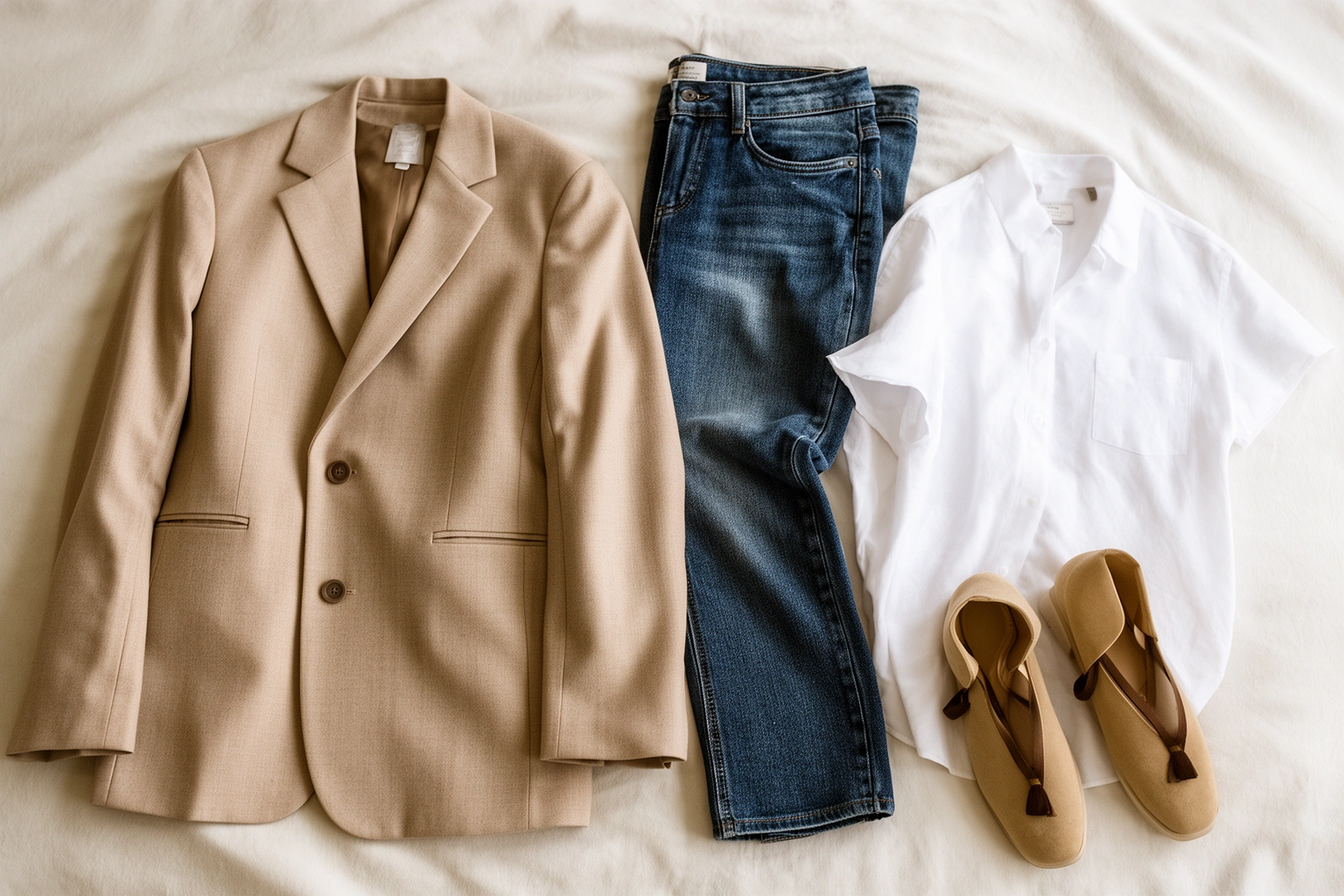
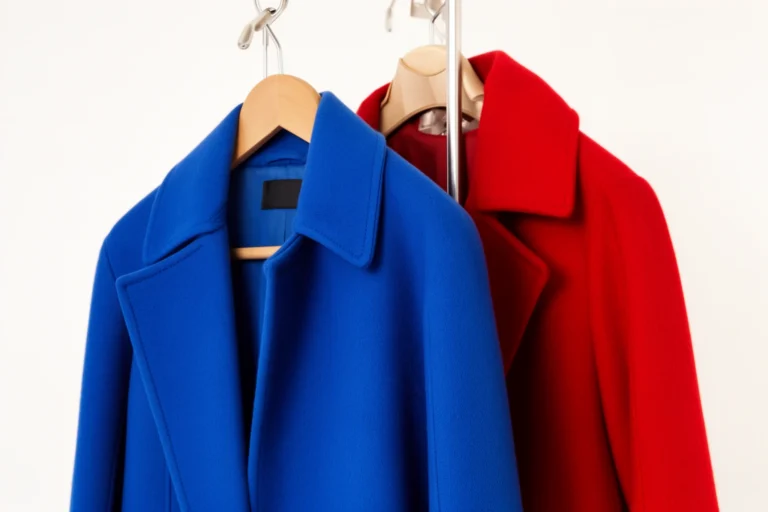
A capsule doesn’t have to be entirely neutral. Adding one or two accent colors that pair well with the base palette adds personality without breaking the mix-and-match system. The real goal is consistency: every piece should reasonably work with several others, rather than being a standout item that only pairs with one specific outfit.
Shop Secondhand First
Thrift stores, consignment shops, and resale platforms like Depop, Vinted, and eBay consistently offer high-quality, sometimes barely-worn basics at a fraction of retail price, making them the most budget-friendly starting point for any capsule wardrobe.
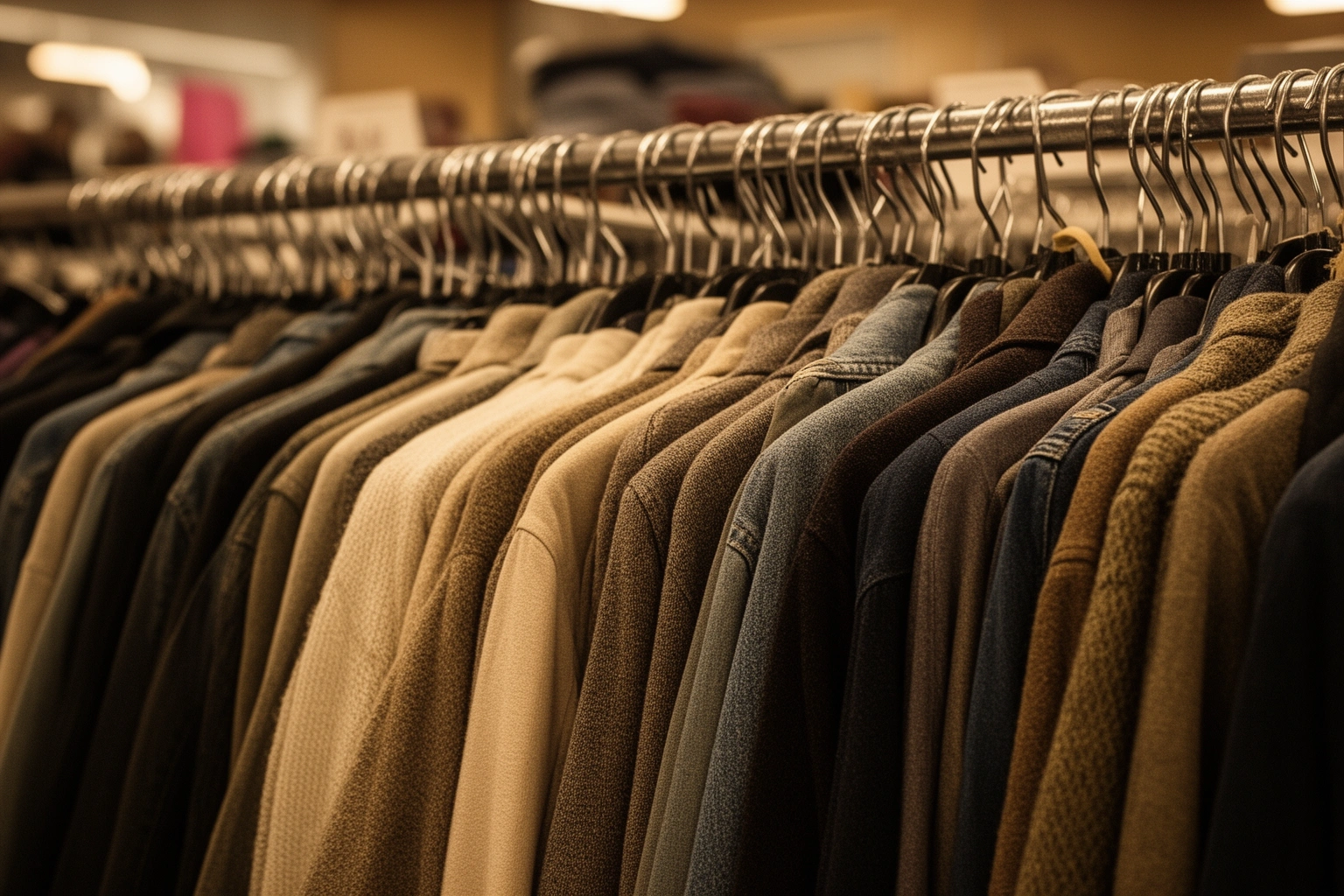
Secondhand shopping also naturally slows down the buying process, since it takes more time to find the right piece than simply ordering something new online. That slower pace tends to work in favor of a capsule wardrobe, which is built through patience and intention rather than fast, impulsive purchases. Checking secondhand options first, before turning to full-price retail, can cover a meaningful portion of a wardrobe without ever hitting a big-box store.
Use the Cost-Per-Wear Rule to Decide What’s Worth Buying New
Dividing an item’s price by how many times it will realistically be worn reveals its true value better than the sticker price alone, which helps justify spending more on high-frequency basics and less on rarely worn pieces.
A $60 pair of leggings worn 60 times works out to $1 per wear, while a $20 top worn only twice costs $10 per wear despite the lower price tag. This framework naturally directs more of a limited budget toward foundational pieces, a good pair of jeans, a versatile blazer, comfortable everyday shoes, that get worn constantly, and less toward trend pieces likely to be worn only a handful of times.
Buy Off-Season for Bigger Savings
Purchasing seasonal items when they’re out of season, a winter coat in spring or summer sandals in fall, takes advantage of clearance pricing that can cut costs significantly compared to buying at the start of the season.
This does require planning a season or two ahead, which isn’t always intuitive when building a wardrobe reactively. But for anyone building slowly and intentionally, watching for off-season clearance sales on core pieces like outerwear, which tend to be some of the more expensive capsule items, is one of the most reliable ways to stretch a limited budget further.
Prioritize a Short List of Versatile Basics
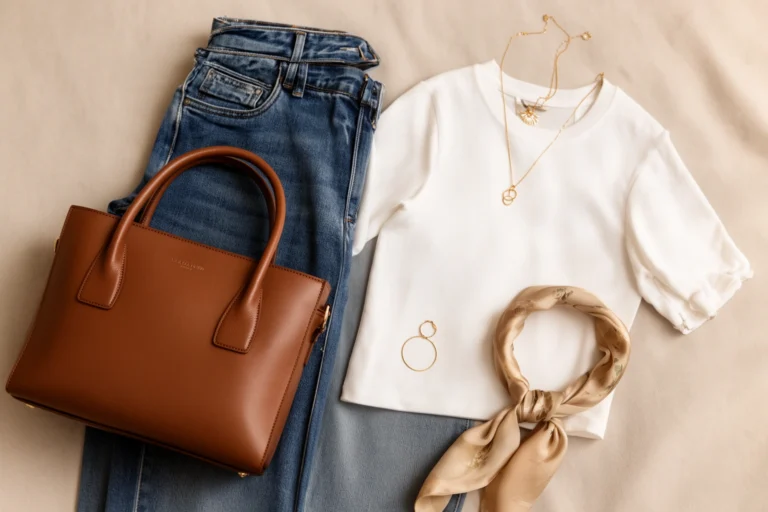
A small set of true multi-purpose pieces, a well-fitting pair of jeans, a neutral t-shirt, a versatile jacket, and one solid dress, forms the foundation everything else gets built around, and prioritizing these first prevents overspending on statement pieces too early.
- A quality pair of jeans: works across dozens of outfit combinations and holds up to frequent wear.
- A neutral or white t-shirt: layers under nearly anything and pairs with almost every bottom.
- A versatile blazer or jacket: instantly elevates a casual outfit for more polished occasions.
- A well-fitting dress: functions as a complete outfit on its own, cutting down on how many separate pieces are needed.
- Comfortable, neutral shoes: should coordinate with most of the wardrobe rather than being reserved for one specific look.
Filling in statement or trend pieces can come later, once the foundational basics are solidly in place and there’s a clearer sense of what’s actually missing.
Budget Capsule Wardrobe Building: Step by Step
| Step | Why It Matters |
|---|---|
| Sort existing closet first | Reveals real gaps instead of guessing what to buy |
| Set a total budget upfront | Controls spending and item count from the start |
| Shop secondhand before retail | Significantly lowers cost on quality basics |
| Apply the cost-per-wear rule | Directs spending toward high-frequency basics |
| Buy seasonal items off-season | Takes advantage of deeper clearance discounts |
| Build slowly over weeks or months | Prevents impulse buying and buyer’s remorse |
Working with a limited budget, it’s generally easier and more sustainable to aim for the smaller end of that range rather than trying to fill out a full 50-piece wardrobe all at once.
Avoiding the Most Common Budget Capsule Mistakes
A handful of predictable mistakes, buying too fast, chasing trends, and skipping the sorting step, are responsible for most wasted spending when people try to build a capsule wardrobe.
- Don’t rush the process: spreading purchases over weeks or months naturally curbs impulse buying.
- Avoid trend-driven pieces early on: basics offer far better long-term value than anything tied to a passing style moment.
- Don’t skip the closet sort: shopping before sorting almost guarantees buying duplicates of things already owned.
- Track cost-per-wear mentally: it reframes spending decisions around actual value instead of the sticker price alone.
Building a wardrobe with this kind of intentionality mirrors the same mindset that goes into curating any personal space well. The same instinct that leads someone to declutter and thoughtfully curate an inspiring workspace applies directly here: fewer, more meaningful pieces chosen with real intention consistently beat a larger collection of things that don’t actually get used.
Frequently Asked Questions
How do I start building a capsule wardrobe on a budget?
Sort through what you already own first to identify real gaps, then gradually add versatile neutral basics through secondhand shopping and sales rather than buying everything at once.
How many pieces should a capsule wardrobe have?
Most capsule wardrobes fall between 25 and 50 total pieces, including accessories. On a tight budget, it’s usually easier to aim for the smaller end of that range.
What is the cost-per-wear rule?
It’s the practice of dividing an item’s price by how many times you’ll realistically wear it, which helps identify which pieces are genuinely worth the investment versus which will barely get used.
Is secondhand shopping a good way to build a capsule wardrobe?
Thrift stores, consignment shops, and resale platforms like Depop, Vinted, and eBay often offer high-quality basics at a fraction of retail price and are a great starting point for a budget capsule.
Does a capsule wardrobe have to be all neutral colors?
No. A capsule doesn’t have to be entirely neutral, but sticking mostly to a neutral base with one or two accent colors makes mixing and matching much easier.
How can I save more money when building a capsule wardrobe?
Buying seasonal items when they’re out of season, like a winter coat in spring, takes advantage of clearance pricing and can significantly cut costs over time.
What are the most important basics to buy first for a capsule wardrobe?
Common items include a quality pair of jeans, a neutral t-shirt, a versatile blazer or jacket, a well-fitting dress, and comfortable neutral shoes.