Why Your Phone Battery Drains Faster in Cold Weather

A phone reading 30% battery one moment and shutting off entirely the next isn’t a sign of a broken device, it’s lithium-ion chemistry responding to cold the exact way it’s built to. This happens to virtually every smartphone brand, and the explanation traces back to how batteries physically move energy at the molecular level. Here’s what’s actually going on inside a cold phone.
The Core Problem: Cold Slows Down Ion Movement
Inside every lithium-ion battery sits a liquid electrolyte that lithium ions travel through to move between electrodes, and in cold temperatures, that liquid thickens, becoming closer to syrup than its normal fluid state. This physical change is the root cause of nearly every cold-weather battery symptom.
As the electrolyte thickens, ion movement slows down significantly, which causes internal resistance inside the battery to rise. The battery then has to work harder to deliver the same amount of power it normally would, and that extra effort wastes energy as heat rather than usable charge.
This explains why a phone can seem to drain unusually fast even when actual usage hasn’t changed at all. The battery isn’t leaking power or malfunctioning, it’s simply less efficient at converting its stored chemical energy into usable electrical output while cold.

Sometimes It’s Not Actually Drain, It’s a Shutdown
A cold battery may not actually be losing charge as fast as the percentage suggests, since the phone can shut down entirely due to voltage instability while genuine remaining battery capacity is still available. This distinction matters for understanding what’s really happening.
According to Battery University, the performance of virtually all battery types drops sharply at low temperatures, a well-documented pattern that applies well beyond just smartphones. In sub-freezing conditions specifically, a phone can shut off seemingly out of nowhere, even when the last reading before shutdown showed a reasonable percentage remaining.
Once the same device warms back up indoors, it frequently turns back on with a battery reading close to where it left off, further confirming that the shutdown was a temperature-triggered protective response rather than an actual loss of stored energy.
Modern Phones Deliberately Shut Down to Protect Themselves
Many modern smartphones, including iPhones and various Android models, are engineered to automatically limit performance or shut down completely when temperatures drop too low, specifically to prevent long-term battery damage. This isn’t a flaw, it’s a built-in safeguard.
Cold conditions can also confuse a phone’s battery management system, leading to unstable power flow and unpredictable charging behavior. This is part of why plugging in a freezing phone doesn’t always produce the expected, steady charging curve users see indoors at normal temperature.
The low end of a battery’s percentage range tends to drain fastest in cold weather specifically, which is why many battery experts recommend keeping a phone’s charge between roughly 20% and 80% during winter months, since operating near empty in cold conditions increases the odds of an unexpected shutdown.
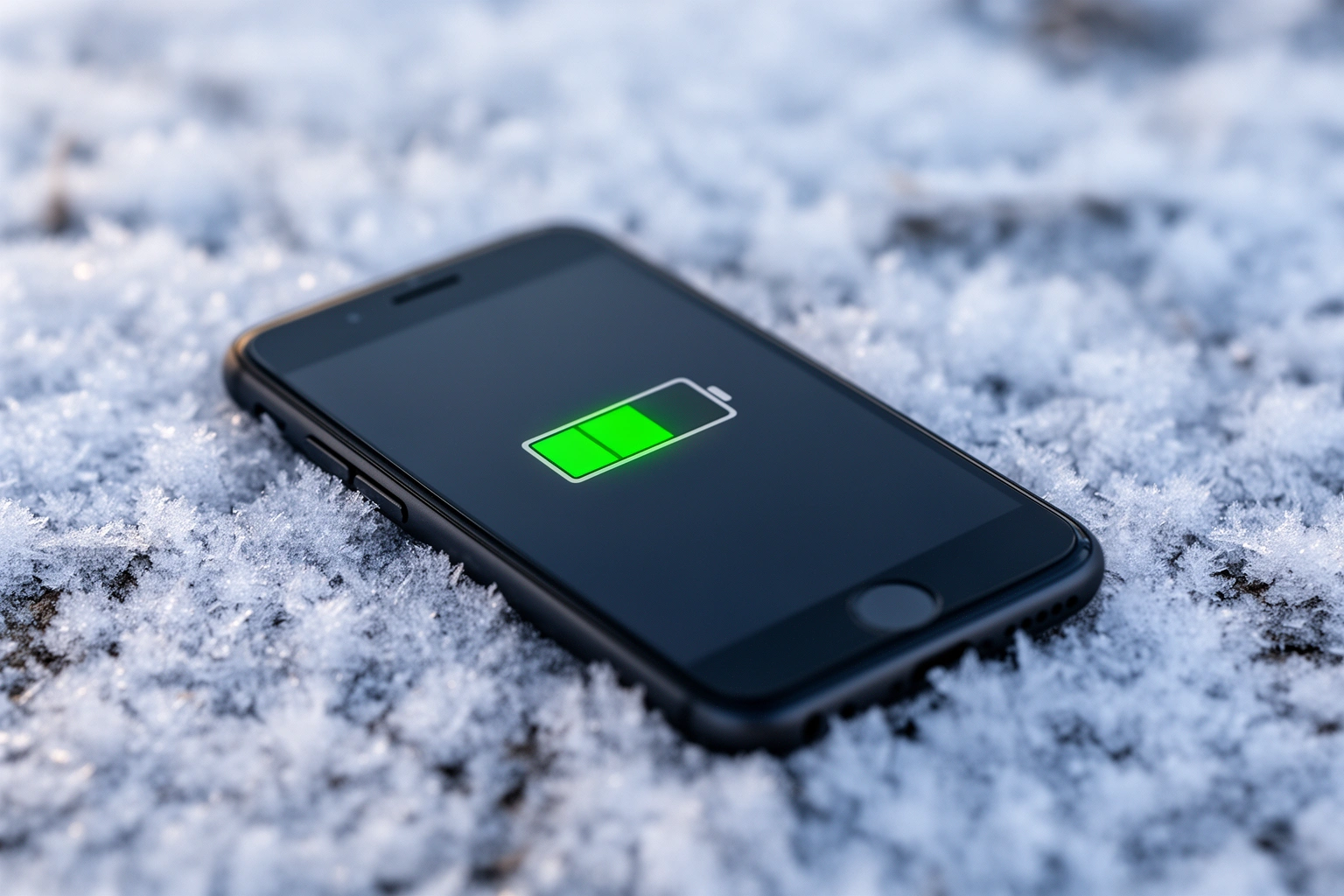
Charging a Freezing Phone Can Cause Real Damage
Unlike temporary cold-weather drain, charging a battery while it’s still below freezing temperature is the one scenario that can cause genuine, permanent harm through a process called lithium plating. This is the important exception to the “it’s just temporary” rule.
Most everyday cold-weather battery symptoms resolve completely once the device warms back up, since the underlying chemistry issue is purely temperature-related and reversible. Charging under freezing conditions, however, risks a different kind of chemical reaction that isn’t reversible in the same way.
This is why letting a very cold phone warm up naturally to room temperature before plugging it in is a more reliable habit than charging it immediately after coming inside from the cold.
Heavy Tasks Make Cold-Weather Drain Worse
Power-intensive activities like gaming, 4K video recording, or heavy GPS navigation demand high power output that accelerates voltage drops, compounding whatever cold-related inefficiency the battery is already experiencing. Usage patterns and temperature effects stack together rather than acting independently.
This combination explains why phones so often die faster specifically while people are actively using them outdoors, navigating with maps, taking photos, or streaming, activities that already draw significant power even at room temperature. Add cold-weather inefficiency on top of that baseline demand, and the battery gets pushed even harder than usual.
Simple Habits That Actually Help
Keeping a phone physically warm, minimizing heavy background tasks, and avoiding charging while freezing are the three most consistently recommended strategies for managing cold-weather battery drain. None of these require special equipment to implement.
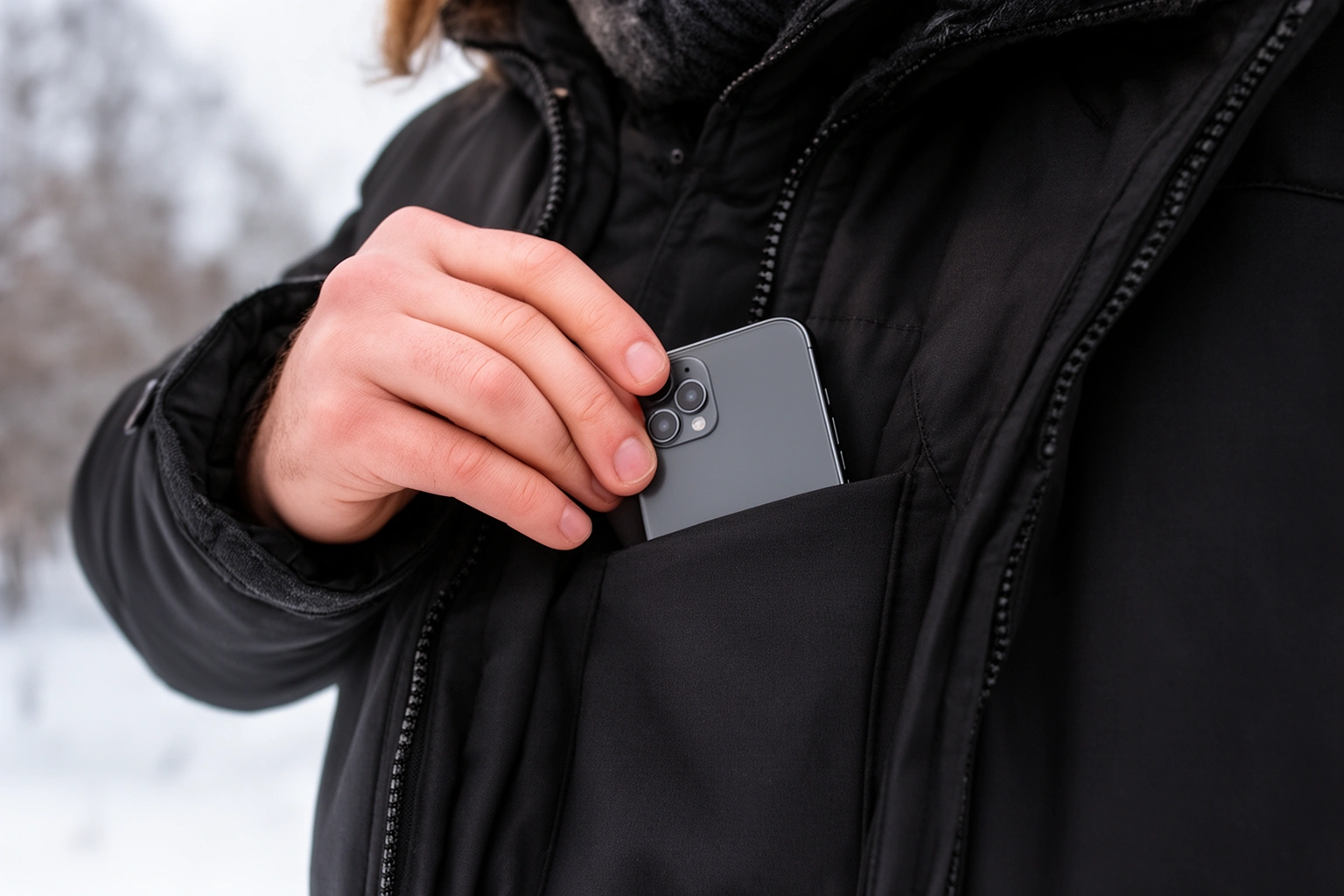
Keeping a phone inside a pocket, particularly an inner jacket pocket close to body heat, rather than in an exposed bag or car seat, meaningfully slows the rate at which the internal temperature drops. A protective case with some insulating material can also help retain heat and stabilize performance during extended outdoor use.
Turning off nonessential background features like Bluetooth, location services, or Wi-Fi scanning during cold outings reduces overall power draw, giving the already-strained battery less total work to do. This kind of small technical adjustment mirrors the everyday, behind-the-scenes engineering covered in fun history behind the first emoji ever created, where understanding how something works day to day often comes down to appreciating the specific physical or technical constraints shaping it.
Cold Weather Battery Symptoms at a Glance
Recognizing which symptom is happening helps determine the right response, since not every cold-weather battery issue calls for the same fix. Some issues resolve on their own, while others require a specific precaution.
| Symptom | Cause | Fix |
|---|---|---|
| Faster-than-normal drain | Thickened electrolyte, higher internal resistance | Keep phone warm, limit heavy usage |
| Sudden shutdown | Voltage instability, protective safeguard | Warm phone before restarting |
| Unstable charging | Confused battery management system | Let phone reach room temperature before charging |
| Permanent capacity loss | Lithium plating from charging while freezing | Never charge a sub-freezing device |
In nearly every case, cold-weather battery drain is a reversible chemistry slowdown, not permanent damage, with the one key exception being charging a battery while it’s still below freezing.
The Takeaway for Winter Phone Use
Cold-weather battery drain is a predictable, temporary chemistry response rather than a sign of a failing device, and a few simple habits can meaningfully reduce how often it becomes a real problem. Understanding the “why” makes the occasional winter shutdown far less alarming.
Readers curious about more of the everyday science and technology quietly shaping daily life can find additional explainers on AestheticPFPs, where tech topics get the same clear, approachable treatment as this deep dive into cold-weather batteries.
Frequently Asked Questions
Why does cold weather affect phone batteries?
Cold temperatures thicken the liquid electrolyte inside lithium-ion batteries, slowing ion movement and raising internal resistance, which makes the battery work harder and appear to drain faster.
Is my phone battery actually being damaged by the cold?
No, in most cases the battery isn’t actually losing charge as fast as the percentage suggests, the phone often shuts down due to voltage instability while real capacity remains, and it usually turns back on once warmed up.
Can charging my phone in the cold actually hurt it permanently?
Yes, charging a battery while it’s still below freezing can cause lithium plating, a genuine and permanent form of battery damage, unlike most other temporary cold-weather symptoms.
Why does my phone shut off completely in freezing weather?
Many modern iPhones and Android devices are designed to limit performance or shut down completely in extreme cold specifically to protect the battery from long-term damage.
What’s the best way to prevent cold-weather battery drain?
Keeping the phone in an inner jacket pocket close to body heat, avoiding heavy tasks like gaming or GPS use, and letting a cold phone warm up before charging all help reduce drain.
Should I keep my phone charged differently in winter?
Many experts recommend keeping a phone’s charge between roughly 20% and 80% during cold weather, since the low end of the battery range tends to drain fastest and increases shutdown risk.