Fun Facts About the World’s Most Unique Homes

The world’s strangest homes prove that shelter doesn’t have to follow any conventional blueprint. From a house shaped like a crashed spaceship to a dwelling carved directly into a cliff face, architects and self-taught builders alike have spent decades pushing the definition of what a home can actually be. These facts trace some of the most unusual, record-breaking, and genuinely inventive homes on the planet.
Some Unique Homes Took Decades to Build by One Person
The Steel House outside Lubbock, Texas, was handcrafted entirely by sculptor Robert Bruno over 35 years, from 1973 until 2008, without any outside assistance, and it was still unfinished when he died. Its bizarre, organic form has been compared to a UFO, a giant insect, and even a Star Wars AT-AT walker.
Vietnam’s Hang Nga, nicknamed the Crazy House, followed a similarly unconventional path. Architect Dang Viet Nga designed it as a passion project inspired by local banyan trees, working without formal blueprints and instead painting her ideas before collaborating directly with local craftsmen. It’s been open to the public since 1990, and visitors can even rent a room.
These solo, decades-long builds share a common thread: no outside funding, no rigid plan, and a single creative vision carried through years of hands-on construction.
Entire Communities Live in Homes Built Into the Landscape
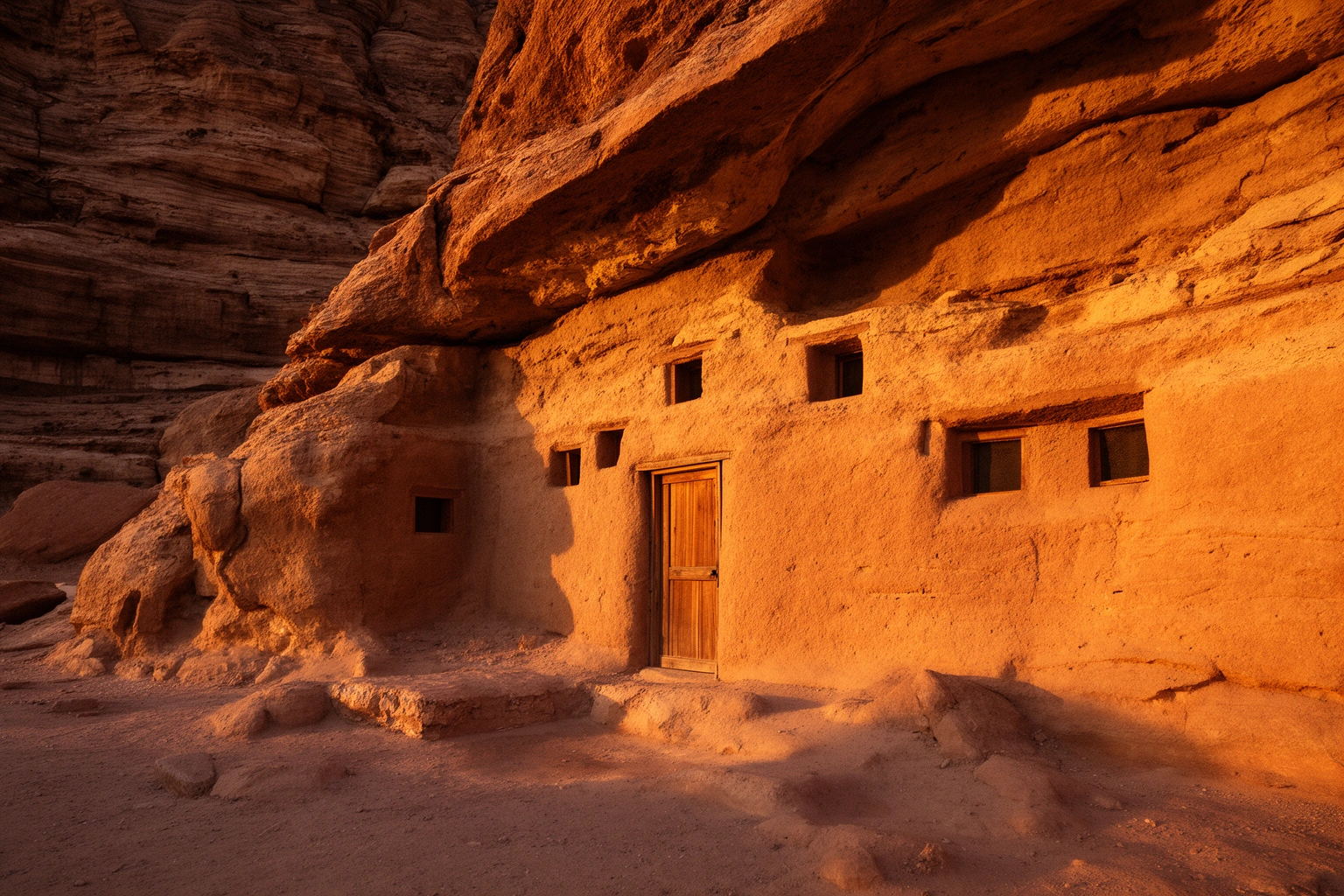
In Coober Pedy, Australia, residents live in underground homes carved to escape extreme desert heat, while in Cappadocia, Turkey, entire homes are carved directly into ancient rock formations. These aren’t isolated architectural experiments, they’re established, functioning communities.
The underground homes of Coober Pedy stay naturally cool without air conditioning, since the surrounding earth insulates against the region’s extreme surface temperatures. Cappadocia’s cave homes carry an otherworldly, cozy quality, having sheltered residents in the same rock formations for generations.
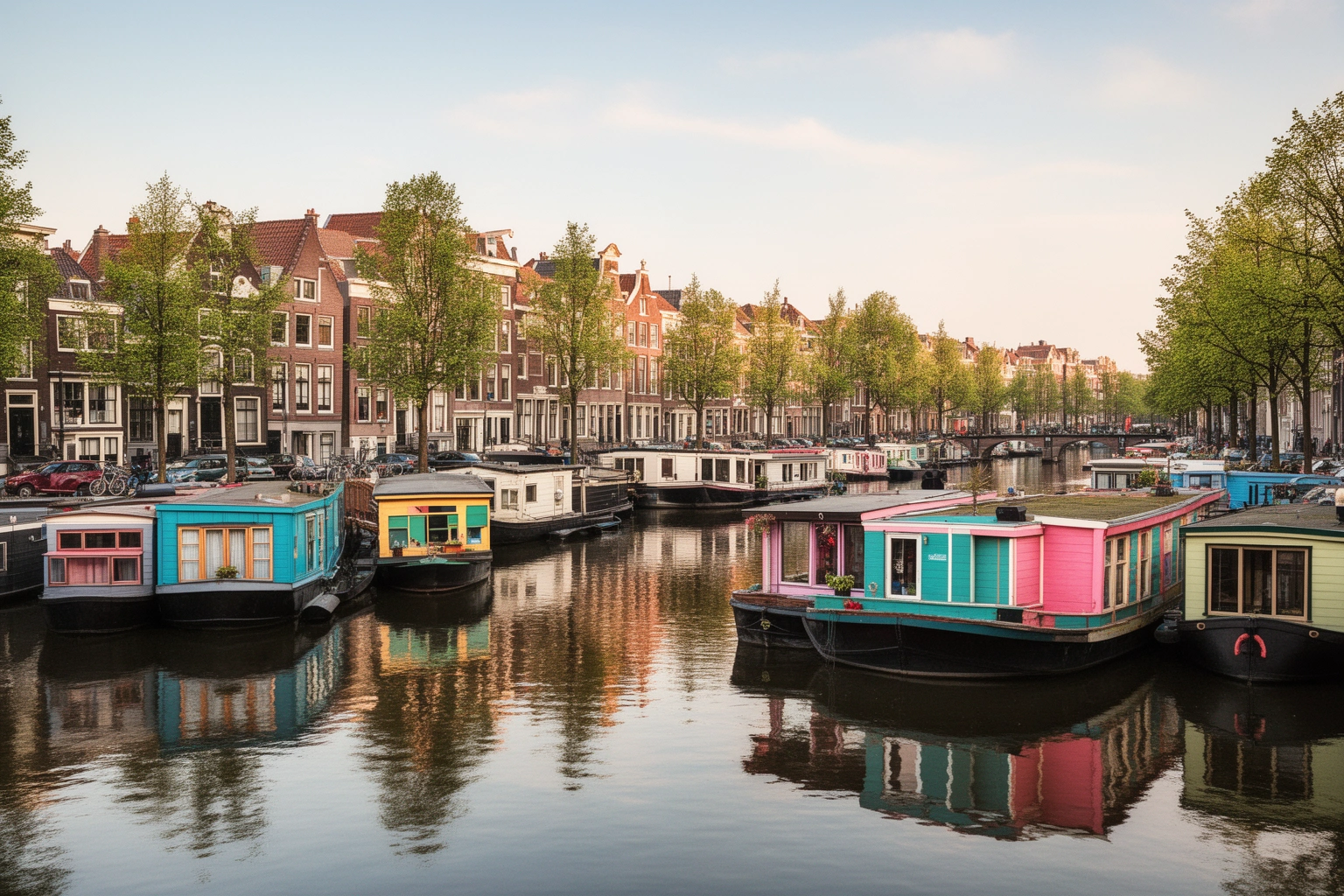
Amsterdam takes a completely different approach to unconventional housing, with floating houseboats lining the city’s canals. These homes function as a genuine housing solution rather than a novelty, reflecting the city’s long history of adapting architecture to its waterways.
Some Homes Were Repurposed From Something Entirely Different
Several of the world’s most unusual homes started life as something else entirely, including a decommissioned church, an abandoned cement factory, and a salvaged Boeing 727 airplane. Adaptive reuse has produced some of the most striking residential transformations on record.
Utrecht’s Saint Jakobus Church, dating back to 1870, stopped functioning as a place of worship in 1991 and was eventually converted into a private residence after a stint as an event and furniture showroom. In Barcelona, architect Ricardo Bofill discovered an abandoned cement factory in 1973, complete with more than 30 silos and underground galleries, and transformed the industrial ruin into his own home and studio.
A salvaged Boeing 727 airframe, meanwhile, was transported piece by piece to a jungle site in Costa Rica and reassembled into a hotel, proving that even a decommissioned aircraft can become a genuinely livable structure with enough ambition.
Record-Breaking Homes Push Size to Both Extremes
The Keret House in Warsaw, Poland, holds the record for the world’s narrowest house at just 4 feet across at its widest point, while at the other extreme, Mumbai’s Antilia is valued at more than $2 billion and spans 27 floors. Unique homes stretch in both directions on the size spectrum, not just toward the strange.
Antilia includes a private movie theater and its own helipad, built for a single billionaire family. Meanwhile, Germany’s “One SQM House” occupies exactly one square meter, functioning more as an art project than a livable dwelling, though it technically counts as a home by definition.
The gap between these two structures captures just how broad the definition of “home” can stretch when unlimited budget meets architectural ambition, or when a tiny footprint becomes the entire point of the design.
Architecture as Public Art and Cultural Symbol
Prague’s Dancing House, designed by Vlado Milunić and Frank Gehry and completed in 1996, was built on a site destroyed during World War II and uses a deconstructivist design resembling two dancers to symbolize the city’s transition into a new era. Some unique homes function as much as public art and cultural statement as private residence.
The building, nicknamed “Ginger and Fred” after the legendary dance duo Ginger Rogers and Fred Astaire, features one glass tower appearing to lean gracefully against a more rigid stone counterpart. It stands in deliberate contrast to Prague’s centuries-old surrounding architecture.
Ohio’s Longaberger Company headquarters took a more literal symbolic approach, built in the 1990s to resemble an actual giant picnic basket, complete with wider upper floors and oversized handles, directly reflecting the company’s core product line.
The World’s Oldest Continuously Inhabited Homes Are Older Than Expected
The Italian city of Matera contains houses that have been continuously inhabited for more than 9,000 years, while archaeologists have found stone-and-turf dwellings in Scotland dating back over 10,000 years. The concept of a permanent home is far older than most people assume.
These ancient structures reveal how early humans developed shelter and permanent settlement long before anything resembling modern architecture existed. That such structures remain inhabited or intact after thousands of years speaks to both the durability of stone construction and humanity’s long-standing instinct to root itself in a specific place.
Anyone drawn to unusual, hands-on creative projects might find some crossover with the kind of exploratory mindset covered in fun hobbies to try if you’re bored of your routine, since many of history’s strangest homes started as exactly that: a personal passion project taken to an extreme.
Standout Facts at a Glance
Comparing these unusual homes side by side highlights just how differently “unique” can manifest, whether through scale, material, symbolism, or sheer stubborn persistence. No two entries on this list solved the same design problem the same way.
| Home | Location | What Makes It Unique |
|---|---|---|
| Steel House | Texas, USA | 35 years of solo handcrafted construction |
| Keret House | Warsaw, Poland | World’s narrowest house, 4 feet wide |
| Antilia | Mumbai, India | $2 billion+ valuation, 27 floors |
| Dancing House | Prague, Czech Republic | Deconstructivist design symbolizing cultural change |
| Matera dwellings | Matera, Italy | 9,000+ years of continuous habitation |
That’s how long some homes in Matera, Italy have been continuously inhabited, making them among the oldest lived-in dwellings anywhere in the world.
What These Homes Reveal About Human Creativity
From ancient cave dwellings to a billion-dollar skyscraper mansion, the world’s most unique homes all share one trait: a willingness to reject the standard blueprint in favor of something genuinely personal. Shelter, at its most creative, becomes a direct expression of the people who built it.
Readers who enjoy this kind of offbeat, fact-driven exploration of the world can find more curious reading on AestheticPFPs, where unusual topics get the same thoughtful, well-researched treatment as everyday lifestyle content.
Frequently Asked Questions
What is the longest a unique home has ever taken to build?
The Steel House outside Lubbock, Texas took sculptor Robert Bruno 35 years to build by hand, from 1973 to 2008, and it was still unfinished at the time of his death.
What is the narrowest house in the world?
The Keret House in Warsaw, Poland holds the record for the world’s narrowest house, measuring just 4 feet at its widest point.
Do people actually live in underground or cave homes today?
Yes, in Coober Pedy, Australia and Cappadocia, Turkey, entire established communities live in homes built underground or carved directly into rock formations.
Have any famous homes been converted from completely different structures?
Yes, examples include Utrecht’s Saint Jakobus Church, a converted Barcelona cement factory, and a Costa Rica hotel built from a salvaged Boeing 727 airframe.
What is the most expensive unique home in the world?
Antilia, the private residence of billionaire Mukesh Ambani in Mumbai, India, is valued at more than $2 billion and includes a private movie theater and helipad.
What is the oldest continuously inhabited home in the world?
Houses in Matera, Italy have been continuously inhabited for more than 9,000 years, making them among the oldest lived-in dwellings on record.