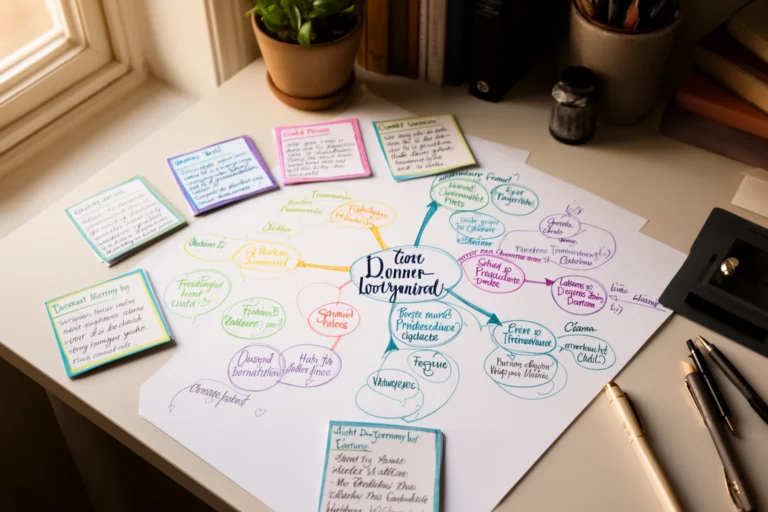
Why Handwriting Notes Beats Typing for Memory

Handwriting notes beats typing for memory because it forces the brain to slow down, process information more deeply, and engage motor and visual systems that typing barely touches. Researchers at the Norwegian University of Science and Technology recorded brain activity using a 256-sensor EEG hairnet and found that handwriting produced far more widespread neural connectivity than typing, spanning regions responsible for movement, vision, and memory. Typing, by comparison, activated only a narrow, repetitive set of pathways.
This isn’t a preference or a nostalgia argument for pen and paper. It’s a measurable difference in how the brain encodes information during the act of writing itself.

What Happens in the Brain When You Write by Hand
Handwriting activates a broad, interconnected network across the brain’s premotor and parietal cortices, cerebellum, and hippocampus, regions tied to fine motor coordination, spatial awareness, and memory consolidation.
The hippocampus in particular plays a central role in converting short-term experiences into long-term memory, and its involvement during handwriting helps explain why handwritten information tends to stick around longer. Typing, by contrast, relies on a much more limited and repetitive set of motor pathways, mostly the same finger movements repeated across different keys, which gives the brain far less sensory feedback to work with.
Forming each letter by hand also means recreating its specific shape and structure, which recruits motor programs tied to the actual visual form of the word, something a uniform keystroke can’t replicate.
Why Slowing Down Actually Helps
Handwriting is slower than typing, and that slowness is precisely what makes it more effective, since it forces selective, deliberate processing instead of verbatim transcription.

Because most people can type close to lecture speed, typed notes often become a word-for-word transcript. That might feel more thorough, but it turns note-taking into a passive, mechanical task. Handwriting can’t keep pace with speech, so the writer has to constantly summarize, paraphrase, and decide what actually matters, and that decision-making process is where the real learning happens.
This ties into a concept researchers call levels of processing: information that gets meaningfully engaged with, rather than just copied, gets encoded more deeply and becomes easier to retrieve later.
Dual Coding: Why Doodles and Diagrams Matter
Handwritten notes naturally include more drawings, arrows, and diagrams than typed notes, and combining visual and verbal information this way, known as dual coding, strengthens both comprehension and recall.
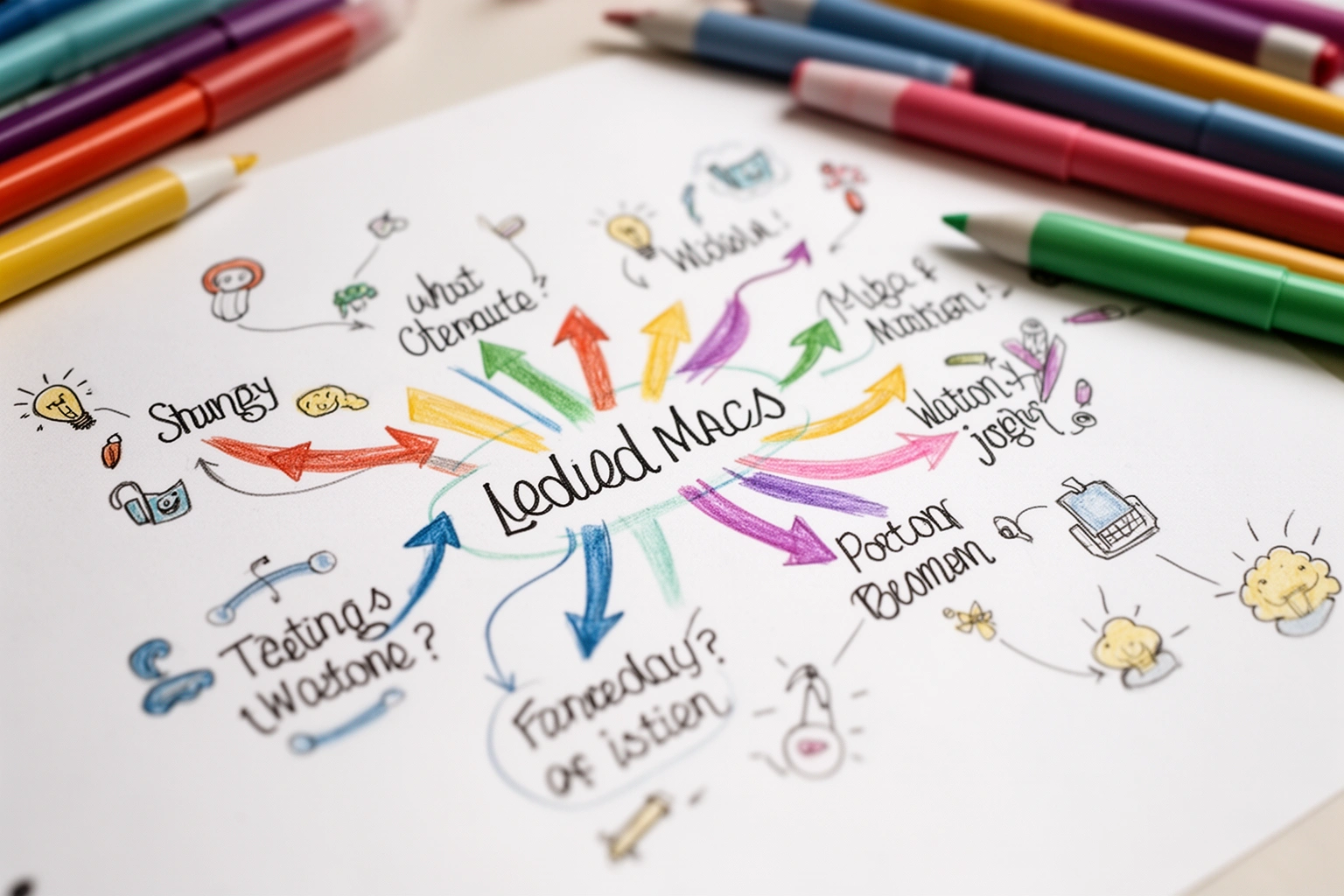
Sketching a quick diagram of a process, or drawing an arrow connecting two related ideas, gives the brain two separate ways to store and later retrieve the same information: a verbal pathway and a visual one. Typed notes rarely include this kind of visual shorthand, since inserting diagrams mid-typing is clunky and most people default to plain text instead.
This is part of why handwritten notes tend to look messier and less uniform than typed ones, and also part of why that messiness correlates with better retention rather than worse.
What the Research Actually Shows
Multiple independent studies, from EEG-based brain imaging to classroom performance comparisons, consistently find that students who take handwritten notes outperform typing students on conceptual recall, even when typists produce longer, more complete notes.
A 2023 study published in Frontiers in Psychology used brain imaging to directly compare handwriting and typing and found measurably more learning-related neural activity during handwriting. Separately, comparisons of college students’ exam performance have repeatedly shown that handwritten note-takers do better on conceptual questions specifically, the kind that require understanding rather than simple recall of a fact.
Researchers point to the same explanation across these studies: typing encourages transcription, while handwriting forces synthesis, and synthesis is what actually builds durable memory.
Where Typing Still Has an Edge
Typing remains genuinely useful for long-form writing, fast information capture, and situations where speed and searchability matter more than deep retention.
Drafting an essay, organizing a large research project, or capturing dense technical information quickly are all cases where typing’s speed advantage outweighs the memory benefits of handwriting. Researchers studying this area generally aren’t arguing for abandoning keyboards entirely, just for recognizing that the two tools serve different purposes. Handwriting suits initial learning and lecture notes; typing suits later-stage writing and organization.
Comparing Handwriting and Typing for Memory
| Factor | Handwriting | Typing |
|---|---|---|
| Brain activity | Widespread, connects motor, visual, memory regions | Limited, repetitive motor pathways |
| Processing style | Selective, summarized | Often verbatim transcription |
| Speed | Slower | Faster, closer to speech speed |
| Visual elements | Easy to add diagrams and arrows | Rarely includes drawings |
| Best use case | Initial learning, lecture notes | Long-form writing, organization |
NTNU researchers recorded activity from 256 sensors and found handwriting engaged visual, sensory, and motor regions together, while typing produced comparatively minimal connectivity.
How to Use Handwriting Effectively for Studying
Getting the memory benefits of handwriting doesn’t require abandoning digital tools entirely, just using pen and paper at the specific stages where deep encoding matters most.
- Take initial lecture notes by hand: this is where the summarizing and synthesis benefits matter most.
- Add diagrams and arrows freely: even rough sketches strengthen dual coding and make concepts easier to recall.
- Rewrite key notes by hand after class: a second handwritten pass reinforces the material a second time, in a different format than the original.
- Switch to typing for later drafts: once material is understood, typing is fine and often more practical for organizing a final essay or project.
Handwriting is just one part of a broader toolkit of memory techniques worth combining, alongside study hacks like spaced repetition and active self-testing, which reinforce material in different ways once the initial handwritten notes are down on paper.
Frequently Asked Questions
Why does handwriting help memory more than typing?
Handwriting activates broader brain connectivity across motor, visual, and memory regions, while typing relies on a narrower, repetitive set of motor pathways with less sensory feedback.
Is there scientific research proving handwriting is better for memory?
Yes. A 2023 study in Frontiers in Psychology using EEG scans found handwriting produced significantly more learning-related brain activity than typing.
Why does writing notes by hand slower actually help learning?
Because handwriting is too slow to transcribe speech word for word, forcing the writer to summarize and prioritize information instead, which leads to deeper processing.
What is dual coding and why does it matter for note-taking?
It’s the practice of combining visual and verbal information, such as pairing a diagram with written notes, which handwriting naturally supports more than typing does.
Is typing ever better than handwriting for studying?
Typing is more practical for long-form writing, fast information capture, and organizing large projects where speed and searchability matter more than initial deep learning.
How can I get the memory benefits of handwriting without giving up typing entirely?
Take initial lecture notes by hand, add diagrams or arrows where relevant, and switch to typing for later-stage writing or organizing a final draft.
Do handwritten notes lead to better exam performance?
Yes. College students who take handwritten notes have repeatedly outperformed typing students on conceptual questions specifically, even when the typists’ notes were longer.