Why Jury Duty Exists and How It Works (Simple Explainer)

A jury summons rarely arrives at a convenient time, and for most people it’s the closest they’ll ever come to directly participating in the justice system. Behind the inconvenience sits a genuinely old constitutional idea: that guilt, innocence, and financial responsibility shouldn’t rest in the hands of a single official. Here’s why jury duty exists and exactly what happens once that envelope shows up.
The Core Idea: One Person Shouldn’t Decide Alone
Jury duty exists because the legal system deliberately avoids letting a single judge or government official decide guilt, innocence, or financial liability alone, spreading that responsibility across a group of ordinary citizens instead. This single principle is the foundation for the entire system.
The right to a jury trial is written directly into the U.S. Constitution. The Sixth Amendment guarantees juries in criminal prosecutions, while the Seventh Amendment extends that same right to many civil disputes. This protection has existed in American law for centuries, tracing back to English legal tradition that predates the country itself.
Juries function as a genuine check on government power specifically because jurors come from outside the legal system entirely. Prosecutors, police, and judges all operate within that system daily, but jurors bring an outside perspective that can reject weak evidence or refuse to convict when the facts simply don’t support the charges presented.
Jurors Decide Facts, Not Legal Interpretation
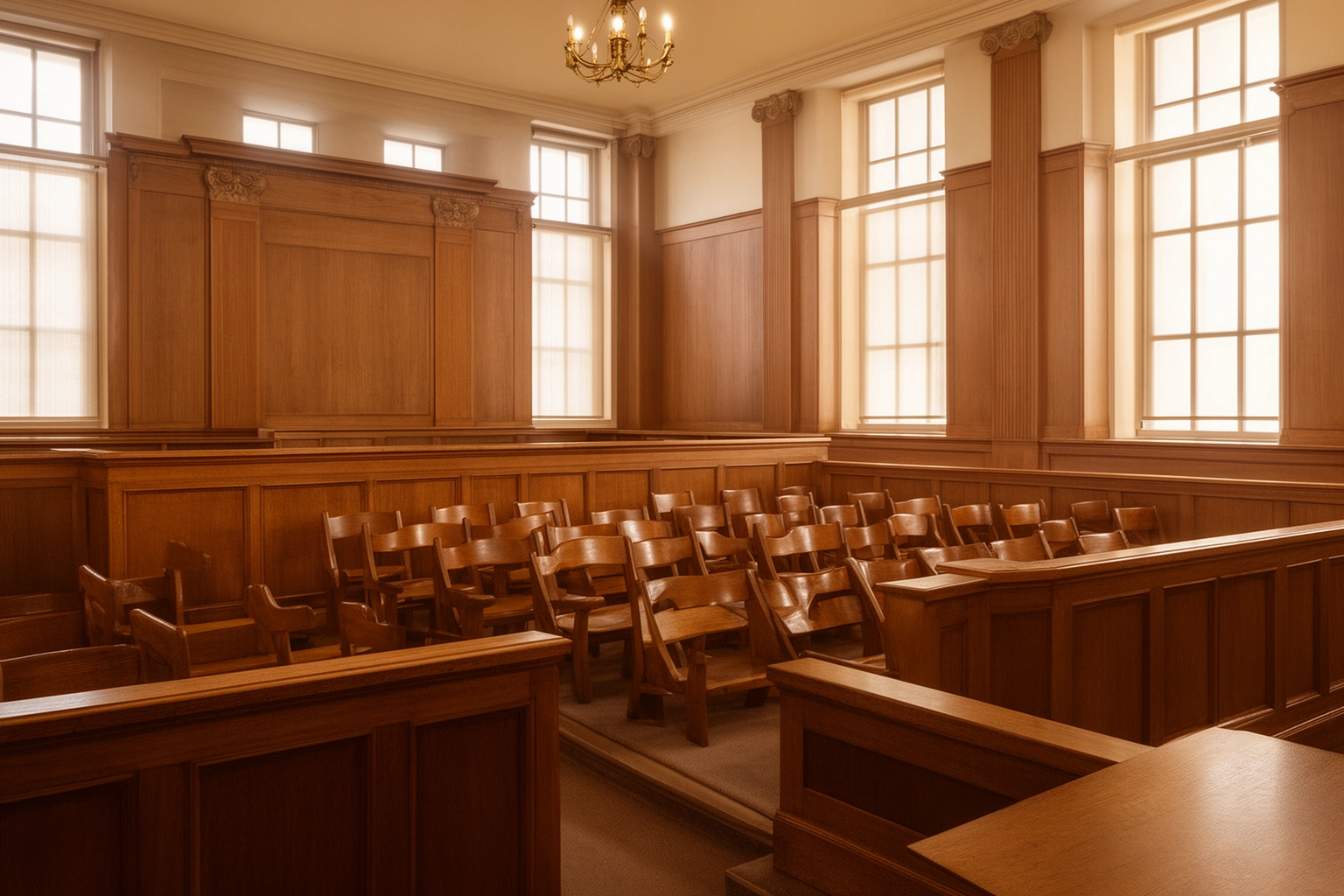
A jury’s job is to determine whether the government or plaintiff met its burden of proof, not to independently interpret the law itself, since the presiding judge explains the relevant legal principles that jurors then apply to the facts. This division of labor is a common misconception worth clearing up.
In a criminal trial, 12 jurors must unanimously agree that the government has shown proof “beyond a reasonable doubt” that the defendant committed the crime charged. This is a notably high bar, deliberately set that way because the consequences of a wrongful criminal conviction are so severe. Civil cases generally operate under a lower “preponderance of the evidence” standard, reflecting the different stakes involved.
A common misconception holds that jurors judge a defendant’s overall character or guilt in some broader sense. In reality, their narrower task is judging whether the specific evidence presented in court legally supports the charge, nothing more and nothing less.
How Someone Actually Gets Selected
Courts randomly select eligible citizens for jury service from public records like voter registration lists and driver’s license databases, then narrow that initial pool through a formal questioning process called voir dire. Selection is designed to be random specifically to avoid any appearance of bias in who ends up serving.
The Jury Selection and Service Act of 1968 legally requires that litigants in federal courts receive juries selected “at random from a fair cross section of the community.” This standard exists specifically to ensure juries reflect a genuine mix of backgrounds and life experiences, which research and legal tradition both suggest reduces bias and improves overall trust in the resulting verdicts.
During voir dire, both the prosecution and defense attorneys, along with the judge, can dismiss potential jurors for specific reasons, or through a limited number of “peremptory challenges” that don’t require the attorney to state a reason at all. This step exists to weed out anyone who might struggle to judge the specific case impartially.
What Actually Happens on Jury Duty Day
Most jury duty starts with a large assembly room, lengthy waiting periods, and a formal orientation before anyone even sets foot in a courtroom, and being sent home without ever hearing a case is a genuinely common outcome. The reality is often far less dramatic than television portrayals suggest.
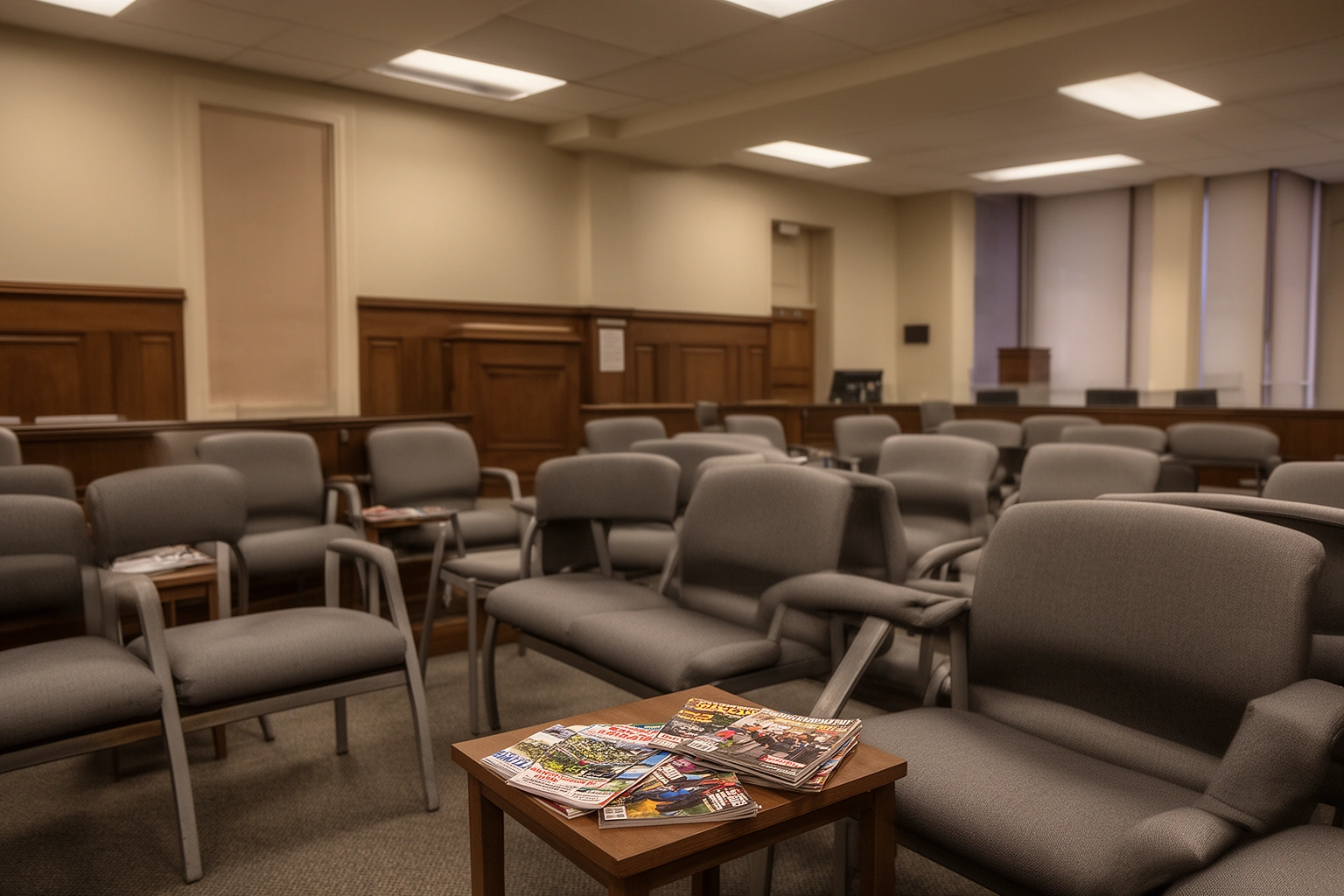
After signing in and showing identification, prospective jurors typically wait in a large assembly room, sometimes alongside a couple hundred other people, before eventually being called into a courtroom for the actual selection process. Courts generally recommend bringing something to pass the time, since waiting periods can run long and unpredictably.
Jurors who are ultimately selected take a formal oath and are legally barred from discussing the case with anyone, including fellow jurors, until deliberations formally begin. This rule protects the trial’s integrity by preventing outside opinions or premature judgments from influencing the outcome.
Grand Juries vs. Trial Juries
Grand juries determine whether enough evidence exists to formally charge someone with a crime before a trial even begins, while trial juries hear the actual case and render a final verdict. These are two genuinely distinct functions that often get confused.
A grand jury typically includes 16 to 23 members and requires only a majority to agree that probable cause exists for an indictment, a considerably lower bar than what a trial jury faces. A trial jury, by contrast, generally consists of 12 people who must reach a unanimous verdict, whether in a criminal case requiring proof beyond a reasonable doubt or a civil case applying a different standard of proof.
What Happens When a Jury Can’t Agree
A “hung jury” occurs when jurors reach a genuine deadlock and cannot deliver a unanimous verdict, and while a judge may urge continued deliberation, no juror can be legally forced to change their vote. This protects the fundamental integrity of the jury’s independent judgment.
When deliberations stall, a judge may read what’s known as an “Allen Charge,” a formal statement encouraging jurors to keep working toward a unanimous decision. Even so, that pressure has real legal limits, since a juror who genuinely believes the prosecution hasn’t met its burden of proof is expected to vote not guilty, even if that means standing as the sole dissenting vote. If the deadlock persists, the judge declares the jury hung, and the case may be retried before an entirely new jury.
This deliberate protection against forced unanimity connects to the same broader principle covered in fun facts about weird laws around the world, since legal systems everywhere reflect specific values their society has chosen to protect, even when the resulting rules occasionally slow things down or seem inconvenient to those directly affected.
Legal Protections for Jurors
Federal and state laws specifically protect people summoned for jury duty from being fired, threatened, or penalized by their employer, though most employers aren’t required to continue paying a full salary during jury service. These protections exist to remove financial fear as a barrier to civic participation.
| Protection | What It Covers |
|---|---|
| Job protection | Employers cannot fire, threaten, or intimidate employees for jury service |
| Government employee pay | Federal employees remain in paid status during jury service |
| Hardship excusal | Courts may excuse jurors facing genuine financial hardship |
| Juror privacy | Some courts refer to jurors by number rather than name |
This is the standard all 12 jurors must unanimously agree the prosecution has met before a criminal conviction, one of the highest burdens of proof in the entire legal system.
Why the Inconvenience Is Considered Worth It
Jury duty asks for genuine time and disruption, but the system depends entirely on citizens showing up, since without juries, far more legal power would concentrate in the hands of judges and government officials alone. Understanding that tradeoff is part of what makes the obligation feel less arbitrary.
Readers interested in more clear, well-researched explainers on how everyday legal and civic systems actually work can find additional reading on AestheticPFPs, where legal topics get the same straightforward, accessible treatment as this jury duty explainer.
Frequently Asked Questions
Why does jury duty exist in the first place?
Jury duty exists because the legal system avoids letting a single judge or official decide guilt, innocence, or liability alone, a principle rooted in the Sixth and Seventh Amendments of the U.S. Constitution.
Do jurors decide the law or just the facts of a case?
No, jurors determine whether the evidence presented meets the required legal standard, like proof beyond a reasonable doubt, while the judge explains the relevant law that jurors then apply to the facts.
What’s the difference between a grand jury and a trial jury?
A grand jury decides whether enough evidence exists to formally charge someone with a crime, using a lower majority-vote standard, while a trial jury renders the actual verdict and requires unanimous agreement.
What happens if a jury can’t agree on a verdict?
A hung jury occurs when jurors reach a genuine deadlock and can’t agree on a unanimous verdict; the judge may encourage further deliberation, but cannot force any juror to change their vote.
Can I get fired for missing work due to jury duty?
Federal and state laws protect employees from being fired, threatened, or penalized for jury service, though employers aren’t generally required to continue paying full salary during that time.
How many jurors are needed to reach a verdict?
In a criminal trial, 12 jurors must typically reach a unanimous verdict, applying the standard of proof beyond a reasonable doubt before a conviction can occur.